SDG #176 Aluminium PCBs better for High Power LED Boards?
High power LEDs depend on how well heat is removed from the die, and the usual advice is that an aluminium backed MCPCB is essential. This build and test examines whether that advice holds, comparing aluminium substrate boards against standard FR4 boards carrying the same Cree class emitters, both bolted to a heatsink with the usual thermal interface material.
The key insight is that the PCB is only one link in a chain of thermal resistances. An aluminium core board has a thin dielectric layer between the copper pad and the metal base, which gives a much lower thermal resistance straight down through the board than FR4’s glass epoxy. But FR4 can be made to perform surprisingly well if the layout uses generous copper pours, thermal vias directly under the LED thermal pad and a thin board, because the vias effectively bypass the insulating laminate. What separates the two in practice is how hard the LED is driven: at modest currents the difference in junction temperature is often small enough not to matter, while at full rated current the aluminium board keeps the die meaningfully cooler and therefore preserves lumen output and lifetime.
There are practical trade-offs to weigh before ordering. Aluminium boards are single layer, so routing is limited and any driver circuitry has to be placed elsewhere. They also sink heat aggressively during assembly, which makes hand soldering and hot air rework harder and usually requires preheating. FR4 with vias is cheaper, easier to prototype and can be multilayer. For anyone designing a lighting board, the conclusion is to design the thermal path deliberately rather than assuming that the substrate choice alone solves the problem.
More Electronics Projects

SDG #374 Smart Home Lighting: Adding Wireless DMX to My ESP32 Controller
Adding wireless DMX to an ESP32-S3 touch dimmer using ESP-NOW, with a 16-channel receiver, pairing, smoothing and scope-verified DMX output.
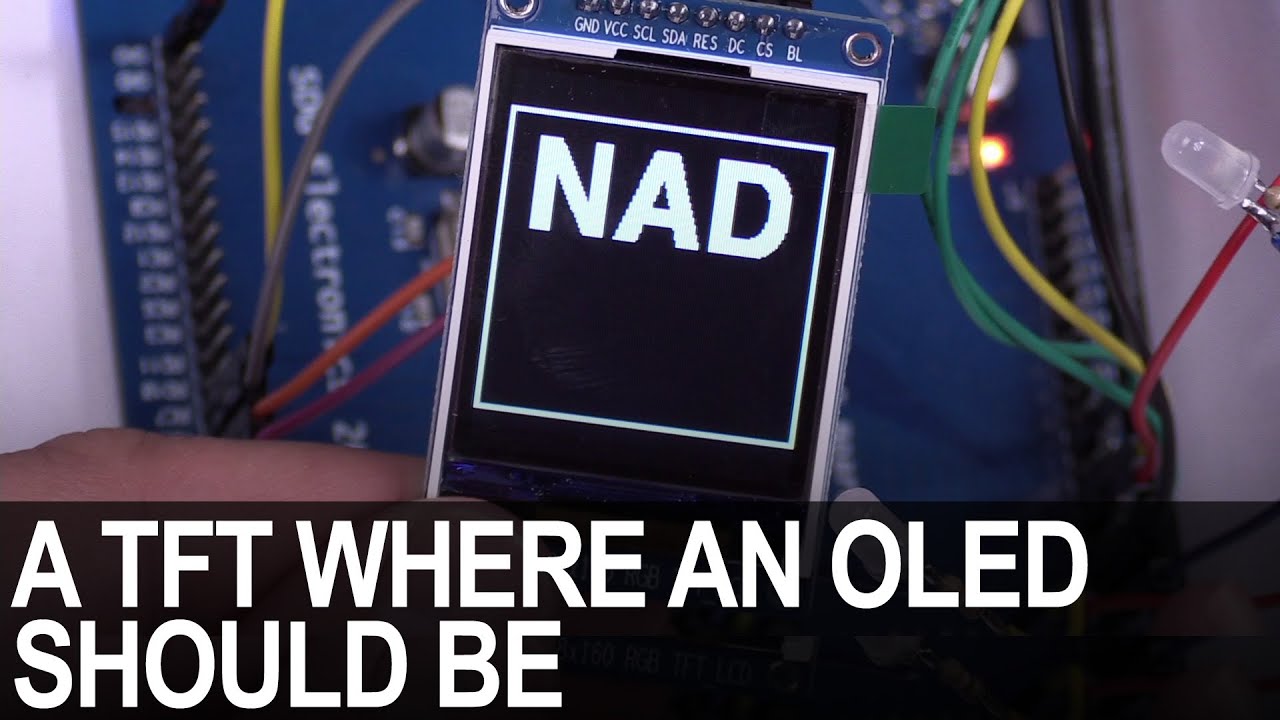
SDG #365 Reverse Engineering NAD D7050 OLED Replacement for IPS TFT
Decoding the NAD D7050's obsolete SSD1355 OLED protocol with a logic analyser, then driving an SSD1351 OLED and ST7735S IPS TFT as replacements.

SDG #360 Zero Crossing Detection and PCBWay 3D Prints
Testing PCBWay nylon PA12 and clear resin wall mounts for a Waveshare 4in ESP32-S3 touch dimmer, plus lower-power zero crossing detection options.