SDG #177 Luxeon Z ES LEDs on Aluminium PCBs
This build follows a small run of custom aluminium backed PCBs (MCPCBs) designed to carry Luxeon Z ES emitters, and it doubles as a practical lesson in why the substrate matters as much as the LED die itself. The boards arrive as single layer aluminium with a thin dielectric layer between the copper and the metal core, and the discussion of that stackup is the most useful part for anyone planning their own high power LED board: the dielectric is the thermal bottleneck, so pad geometry, copper area and the thermal path to the heatsink dictate how hard the part can actually be driven.
The Luxeon Z ES is compared against Cree emitters, which is the comparison most builders end up making. The Luxeon Z family is physically tiny with a domeless, low profile package, giving a very small emitting area that suits tightly collimated optics and torch style throw, while the Cree parts differ in footprint, forward voltage behaviour and how forgiving they are during reflow. Assembly is done with solder paste and hot air, and the aluminium core is significant here because it absorbs heat aggressively, so preheat and patience matter more than on standard FR4.
Testing covers forward voltage and drive current behaviour along with observed output, which is where theory meets reality: the emitters will accept current readily, but thermal management on a thin dielectric MCPCB is what limits sustained brightness and long term reliability. For anyone specifying LEDs for a compact light, the conclusion is that stencil quality, pad design and thermal stackup deserve as much attention as the emitter part number. Ordering stencils alongside the boards is also shown to be a worthwhile step for repeatable paste deposition on these small footprints.
More Electronics Projects

SDG #374 Smart Home Lighting: Adding Wireless DMX to My ESP32 Controller
Adding wireless DMX to an ESP32-S3 touch dimmer using ESP-NOW, with a 16-channel receiver, pairing, smoothing and scope-verified DMX output.
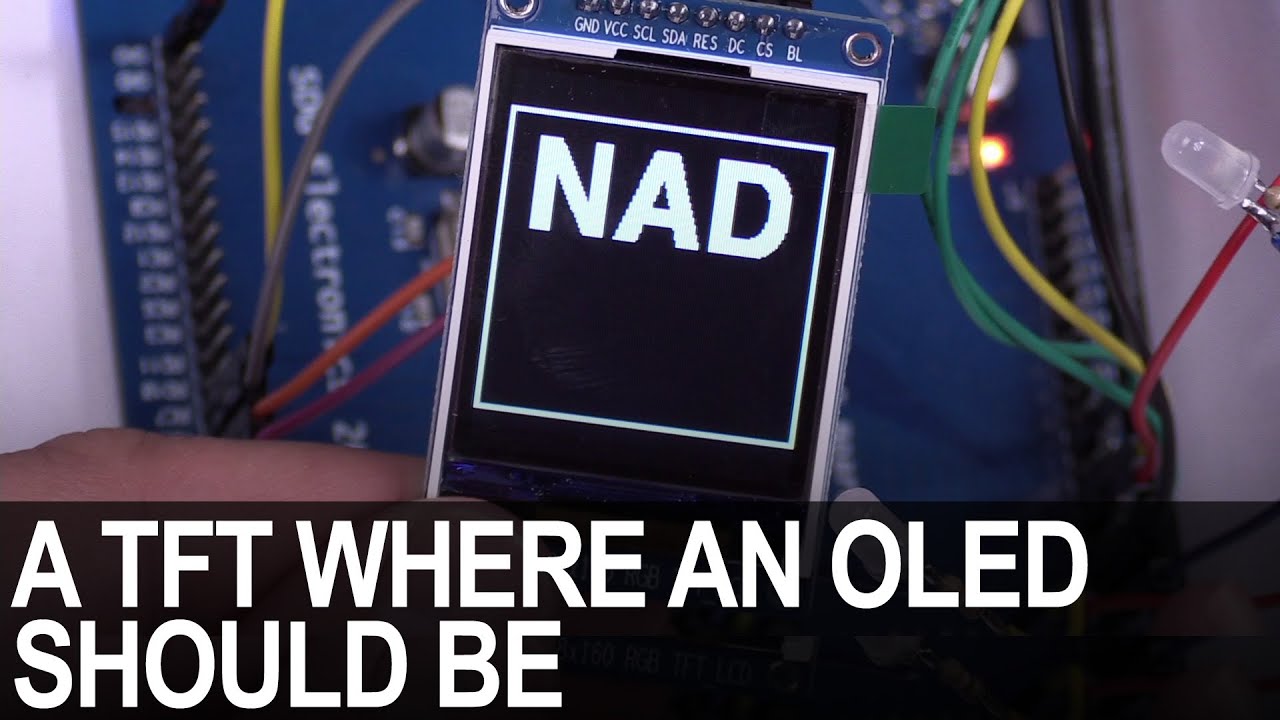
SDG #365 Reverse Engineering NAD D7050 OLED Replacement for IPS TFT
Decoding the NAD D7050's obsolete SSD1355 OLED protocol with a logic analyser, then driving an SSD1351 OLED and ST7735S IPS TFT as replacements.

SDG #360 Zero Crossing Detection and PCBWay 3D Prints
Testing PCBWay nylon PA12 and clear resin wall mounts for a Waveshare 4in ESP32-S3 touch dimmer, plus lower-power zero crossing detection options.