SDG #061 SMD Assembly Using Solder Paste Stencil and Hot Air with PCBs from JLCPCB
This build covers the full bench workflow for assembling a surface mount PCB without a reflow oven: aligning a stainless steel stencil to the bare board, squeegeeing solder paste across the apertures, placing passives and ICs by hand under a microscope camera, then reflowing everything with a hot air station. It is a useful reality check for anyone who has been hand soldering 0805s one pad at a time and wondering whether paste and stencil are worth the extra setup.
The conclusions are practical rather than theoretical. Stencil registration and paste volume matter more than reflow technique; too much paste invites bridging on fine pitch parts, too little gives weak, starved joints. Board support and taping the PCB down so that it cannot shift during the print stroke is the difference between a clean deposit and a smeared one. Hot air reflow is entirely workable at prototype scale, but airflow needs to be low enough that small chip components do not move as the paste liquefies, and heating should be spread across the board rather than concentrated on a single area to avoid tombstoning and thermal shock on plastic connectors.
Additional flux paste is shown as cheap insurance, both for improving wetting and for reworking any joints that do not take. Inspection under magnification afterwards is essential; solder balls, hidden bridges and dry joints are far easier to catch visually than by chasing faults later.
For hobbyists and small batch builders, the message is that cheap fabricated boards plus a stencil, a jar of paste and a decent hot air station make multi board SMD assembly genuinely quick, with the Metcal iron kept nearby for touch-up work.
More Electronics Projects

SDG #374 Smart Home Lighting: Adding Wireless DMX to My ESP32 Controller
Adding wireless DMX to an ESP32-S3 touch dimmer using ESP-NOW, with a 16-channel receiver, pairing, smoothing and scope-verified DMX output.
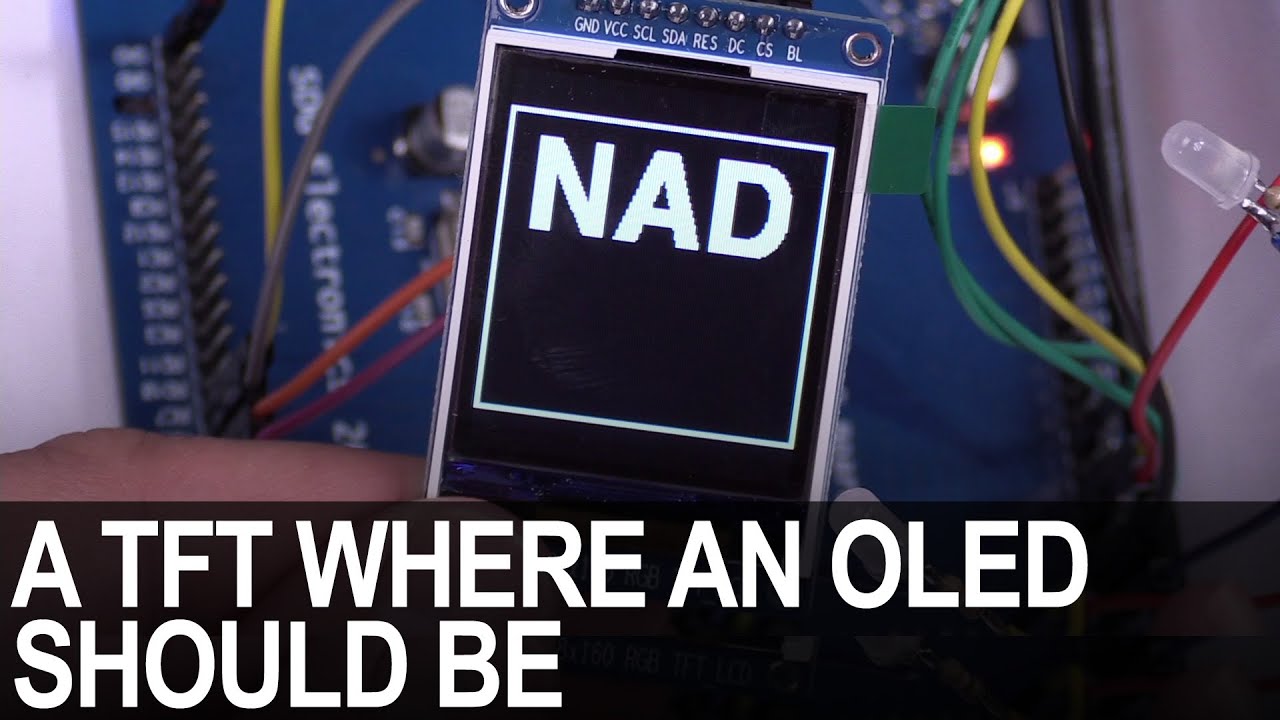
SDG #365 Reverse Engineering NAD D7050 OLED Replacement for IPS TFT
Decoding the NAD D7050's obsolete SSD1355 OLED protocol with a logic analyser, then driving an SSD1351 OLED and ST7735S IPS TFT as replacements.

SDG #360 Zero Crossing Detection and PCBWay 3D Prints
Testing PCBWay nylon PA12 and clear resin wall mounts for a Waveshare 4in ESP32-S3 touch dimmer, plus lower-power zero crossing detection options.