SDG #142 The 2000 LED ESP32 WiFi Megaclock is here! - An NTP Wharton Electronics Style Clock
This episode brings the ESP32 based NTP megaclock project together as a working unit, and it is a good case study in what happens when a hobby display design scales to roughly 2000 discrete LEDs. The inspiration is the classic Wharton Electronics studio clock, the kind of large digit, high brightness timepiece used in broadcast and industrial environments, rebuilt here with modern parts and network time synchronisation instead of a mains frequency or GPS reference.
The engineering problems are all in the drive electronics rather than the software. With that many LEDs, individually addressable strips are impractical, so the design relies on multiplexed segments, constant current sinking and careful attention to peak against average current so that the digits stay evenly lit across the whole display. Even illumination on segments of that physical size matters more than raw brightness: uneven strings appear immediately as patchy digits when viewed from across a room. Assembly of the boards is done with paste, hot air and a microscope, which is worth noting for anyone considering replicating it, since the LED count means a great deal of repetitive placement and many opportunities for tombstoned or misaligned parts.
On the firmware side, the ESP32 handles WiFi association and NTP polling, then drives the refresh loop, which is a sensible division given the chip’s dual cores. Anyone planning a similar build should budget time for power supply sizing and thermal behaviour rather than assuming that the microcontroller side is the hard part. The result is a genuinely readable large format clock that keeps itself accurate without user intervention, and a useful reference for multiplexed LED matrix work in general.
More Electronics Projects

SDG #374 Smart Home Lighting: Adding Wireless DMX to My ESP32 Controller
Adding wireless DMX to an ESP32-S3 touch dimmer using ESP-NOW, with a 16-channel receiver, pairing, smoothing and scope-verified DMX output.
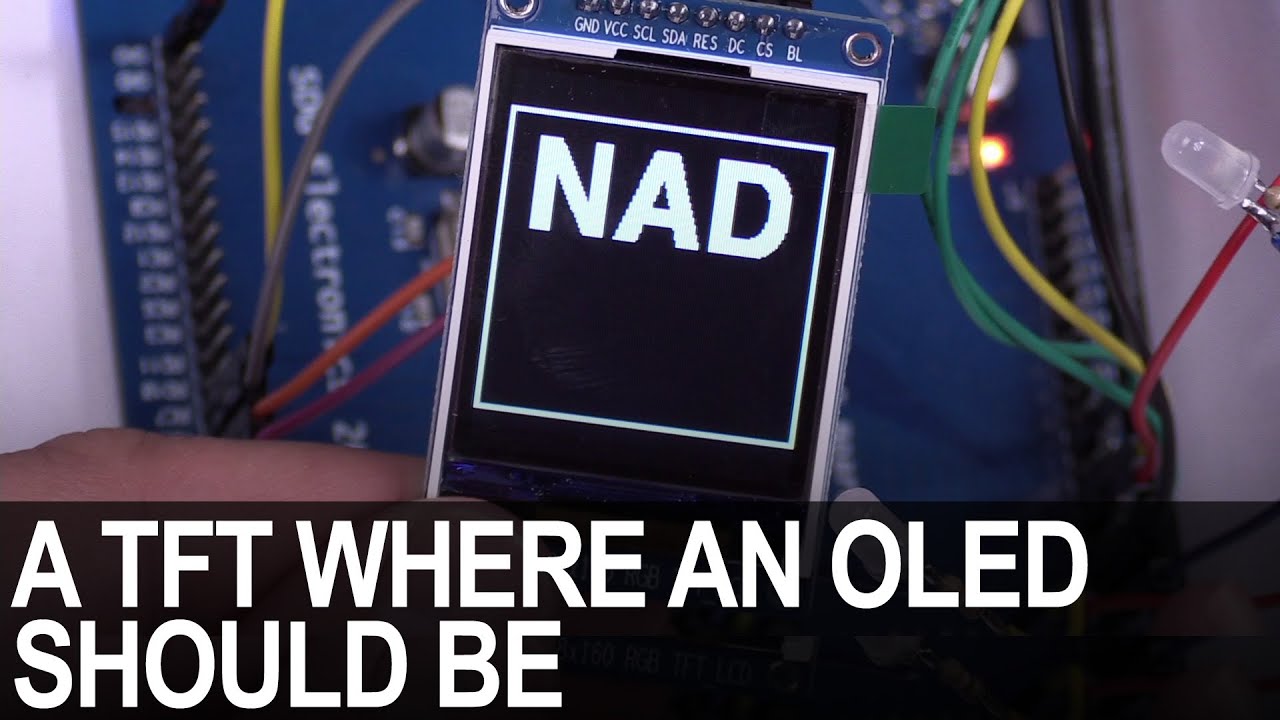
SDG #365 Reverse Engineering NAD D7050 OLED Replacement for IPS TFT
Decoding the NAD D7050's obsolete SSD1355 OLED protocol with a logic analyser, then driving an SSD1351 OLED and ST7735S IPS TFT as replacements.

SDG #360 Zero Crossing Detection and PCBWay 3D Prints
Testing PCBWay nylon PA12 and clear resin wall mounts for a Waveshare 4in ESP32-S3 touch dimmer, plus lower-power zero crossing detection options.