SDG #185 Why is my DC-DC making a audible whine? Also a preview of the MHP30 from MiniWare
Audible noise from a switching converter is a fault that measures correctly on paper but instantly makes a product feel cheap. This episode examines a constant current LED driver built around the LM3409 buck controller and traces the whine back to where the converter is actually operating, rather than blaming a single “bad” component.
The key insight is that a hysteretic or comparator based buck regulator does not run at a fixed switching frequency. Its effective frequency shifts with input voltage, output voltage, inductor value and ripple current setting, and under some operating points it drops far enough into the audio band to become clearly audible. Adding PWM dimming makes this worse, because the driver is being chopped at a low frequency and the inductor and ceramic capacitors respond mechanically through piezoelectric and magnetostrictive effects.
The practical fixes demonstrated are the ones worth remembering for any design: raise the switching frequency by adjusting the current sense and ripple setting components so that the operating point stays above roughly 20 kHz across the whole input range, and replace the inductor with a part whose construction and value keep ripple current sensible without producing noise. Component selection matters as much as topology here, particularly the choice of MLCC dielectric and inductor core type.
The second half is a first look at the MiniWare MHP30, a very compact mini hotplate aimed at reflowing small PCBs and modules. It is shown heating up, holding temperature and reflowing a board, giving a sense of practical throughput and the size of work it realistically suits before a fuller review.
More Electronics Projects

SDG #374 Smart Home Lighting: Adding Wireless DMX to My ESP32 Controller
Adding wireless DMX to an ESP32-S3 touch dimmer using ESP-NOW, with a 16-channel receiver, pairing, smoothing and scope-verified DMX output.
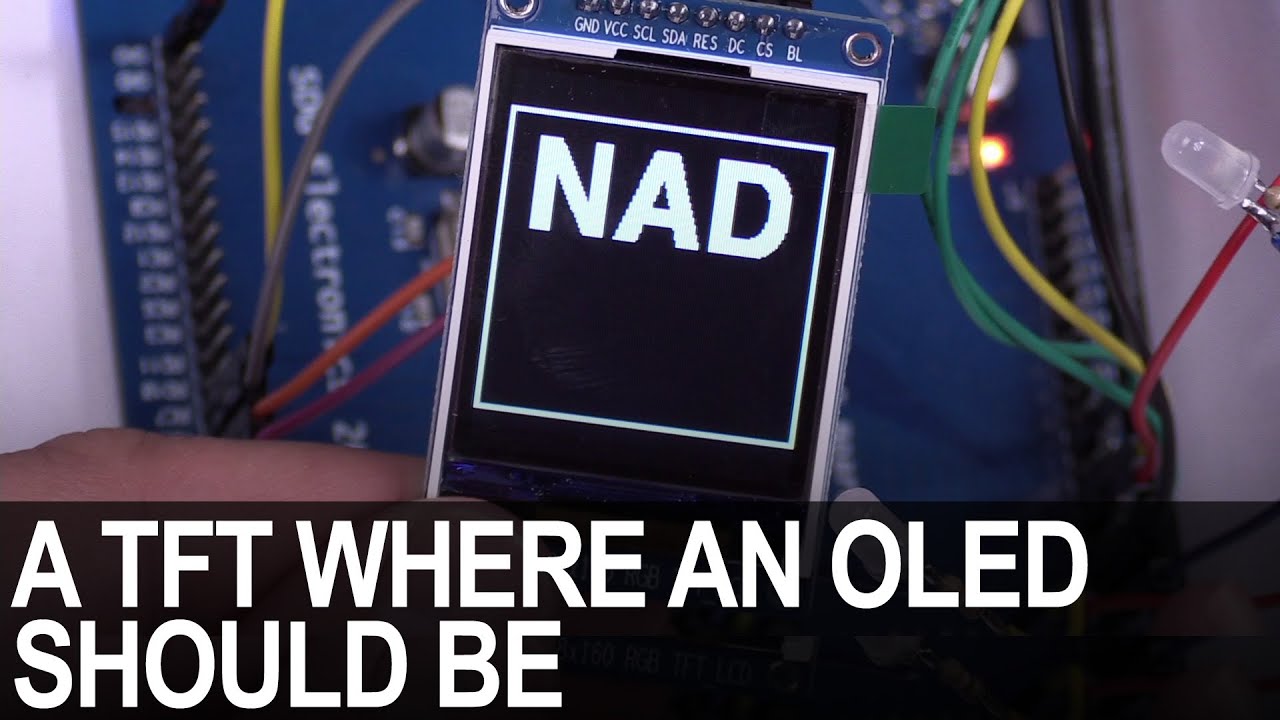
SDG #365 Reverse Engineering NAD D7050 OLED Replacement for IPS TFT
Decoding the NAD D7050's obsolete SSD1355 OLED protocol with a logic analyser, then driving an SSD1351 OLED and ST7735S IPS TFT as replacements.

SDG #360 Zero Crossing Detection and PCBWay 3D Prints
Testing PCBWay nylon PA12 and clear resin wall mounts for a Waveshare 4in ESP32-S3 touch dimmer, plus lower-power zero crossing detection options.