AnapNeo Pro Review: Air Quality Monitor with NDIR CO2 Sensor
Episode 375 ·
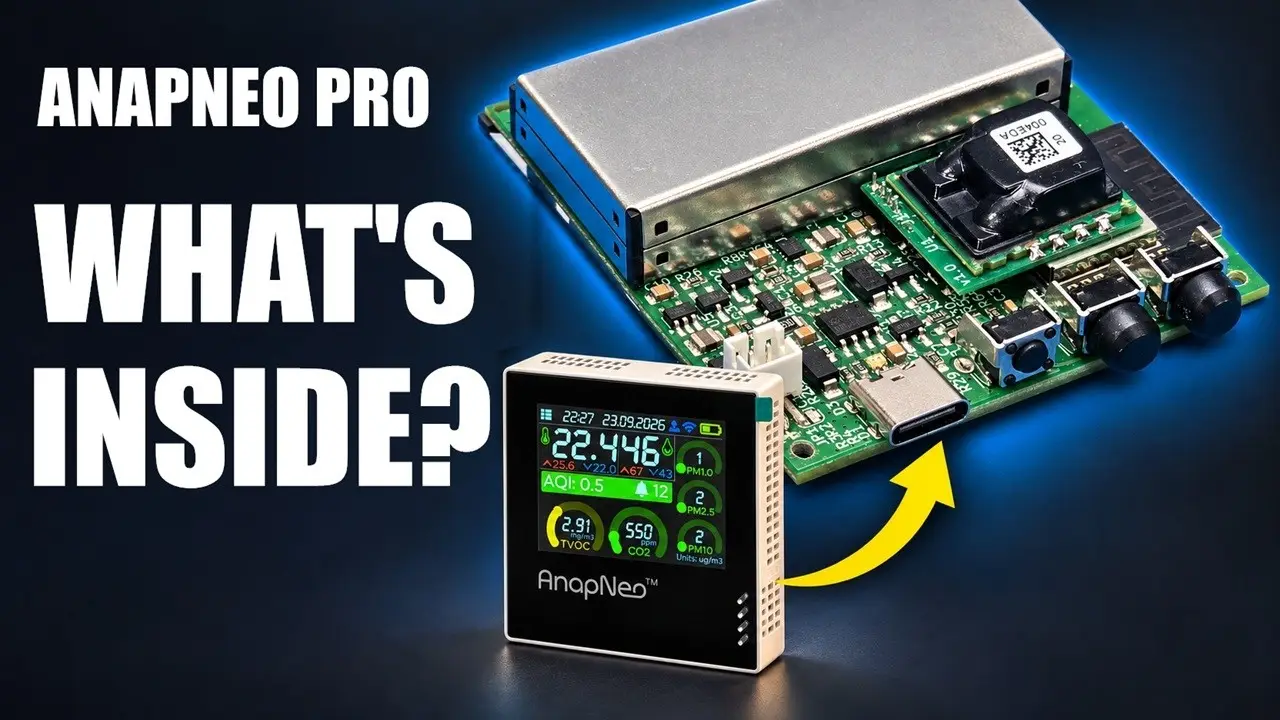
The AnapNeo Pro is an indoor air quality monitor from MARVTECH in Swindon, measuring temperature, humidity, CO2, particulate matter and volatile organic compounds. The Pro adds one thing to the standard model: a Senseair S12 NDIR sensor that measures CO2 directly, where most monitors estimate it from other gases. It has a 2.8 inch colour TFT, a 3000 mAh LiPo battery that should last about 24 hours, and USB-C to charge it or run it indefinitely, with Wi-Fi, Bluetooth, MQTT, history and alarms. Dr Anastasios Kanakis, MARVTECH’s CEO, sent this unit for review, without its front label so it could be taken apart. Its Kickstarter campaign closed before the video was made; MARVTECH now sells it from its own website, starting with a Black Friday pre-order.
Two buttons on the side run everything, each with short and long presses (holding one for five seconds resets it to factory settings), which is easy to forget; labelled soft buttons beside the display would be clearer. At first start-up it calibrates, ideally in fresh air, and needs the time and date setting. The main screen shows the air quality index, VOCs, CO2, particulates, and the temperature and humidity with their highs and lows, but its seven-segment digits look cluttered, and a few hours with a UX designer would improve it. Graphs show each reading over the last couple of hours. The CO2 graph is drawn as filled bars rather than a line, and the temperature settled at 25 °C against 22 °C on a room thermometer, perhaps from handling or the warmth of charging. A second set of views, which change every few seconds, reads more clearly.
Inside, a Renesas RRH46410 MEMS gas sensor measures VOCs (its estimated CO2 isn’t needed here), a temperature and humidity sensor sits in its own compartment, specified by MARVTECH at ±0.3 °C, and the Senseair S12 and an APM10 laser scattering sensor for PM1, PM2.5 and PM10 sit beside an ESP32 module, the LiPo charger and power regulation. On Wi-Fi the unit serves a web page with live readings and trends plotted by day and time of day, which show when a room’s air is poor, but none of the settings. Bluetooth can’t run alongside Wi-Fi, and on this firmware it wouldn’t pair with a phone. Over MQTT it published to MARVTECH’s broker every ten seconds or so, read back by an engineering-style app with alerts set by minimum and maximum, though Home Assistant is the better destination. Sprayed flux cleaner raised the VOC reading modestly. The monitor works well on its own or feeding Home Assistant, and a few around a home, or one on the bench, would show when to ventilate. The engineering is sound; the buttons and main screen are what need work.
More Product Reviews
 Length 0:37
December PCB Deals: Free Colour Upgrades & 3D Printing
A quick look at December PCB fabrication offers: free pink, purple or matte black solder mask upgrades, half price 3D printing, and coupon codes.
 Length 13:04
AliExpress 3-Channel DMX AC Dimmer: Unsafe Isolation
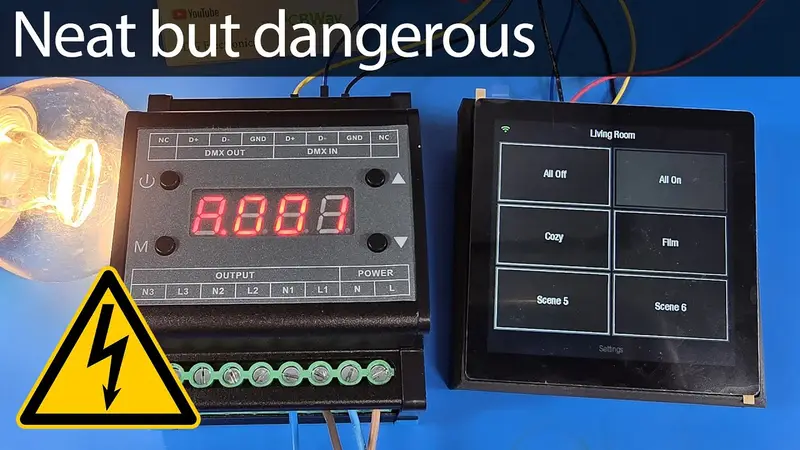
Teardown and testing of a 3-channel DMX512 MOSFET AC trailing edge dimmer from AliExpress. Good circuit design, but the PCB isolation is a serious safety fail.
 Length 11:08
LattePanda Mu Review: Intel N100 x86 Board Computer
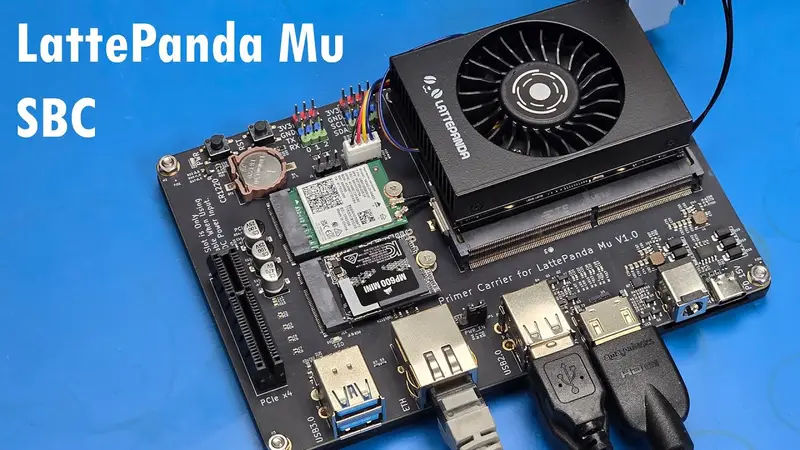
Hands-on with the LattePanda Mu compute module and carrier board: Intel N100, 8GB LPDDR5, PCIe x4, power draw tested and Raspberry Pi 5 compared.