SDG #289 AC-DC Power Supply using Reactance of Capacitors
This episode addresses a practical design question: whether a transformerless capacitive dropper supply can run a pair of mains powered LoRa boards continuously and cheaply. Rather than estimating from datasheet figures, the boards are profiled with a bench power supply and current monitor (an EGteks mPower1203, which proved a frustrating purchase because the software had to be located from obscure sources and run in a virtual machine). That measurement step is the useful part for anyone designing a low power node: the receiver sits at roughly 30 mA with spikes to 36 mA, while the transmitter idles near 26 mA but rises to around 100 mA for a full second during transmission.
The design constraint then becomes clear. A capacitive dropper sets its current from the reactance of a film capacitor at 50 Hz, so peak demand has to come from stored energy rather than from the dropper itself. The LTspice work shows a 3.9 uF dropper feeding a bridge rectifier, bulk electrolytic and zener clamp, with a 0.47 F supercapacitor added on the transmitter to absorb the transmit burst. The trade-off is spelled out clearly: a larger dropper capacitor charges the supercapacitor faster (10 seconds instead of 80) but dumps far more current into the zener as continuous waste heat, which is exactly why zeners and series resistors are the parts that char on cheap PIR floodlight supplies.
Also covered is the reason a linear regulator cannot simply replace the zener at light load, plus the prototype PCB layout with dual film capacitor footprints and a fusible input resistor. Switch mode alternatives running directly from the mains are noted for future episodes.
More Electronics Projects

SDG #374 Smart Home Lighting: Adding Wireless DMX to My ESP32 Controller
Adding wireless DMX to an ESP32-S3 touch dimmer using ESP-NOW, with a 16-channel receiver, pairing, smoothing and scope-verified DMX output.
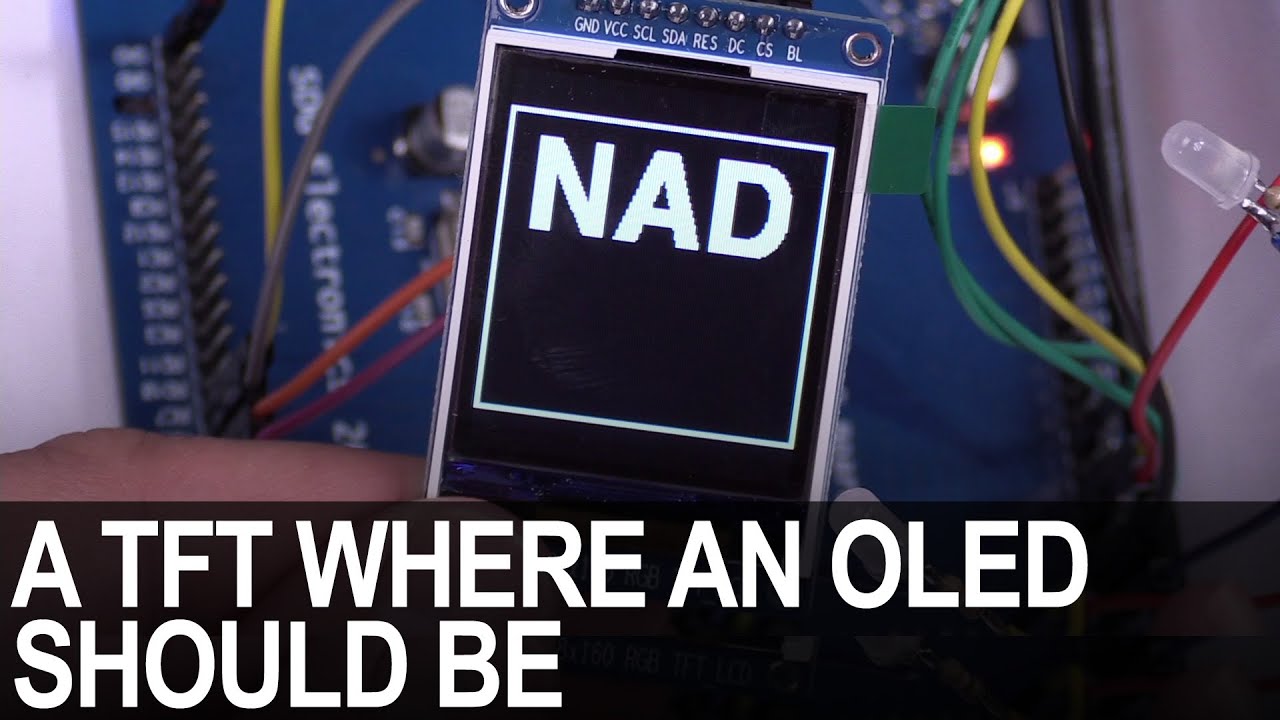
SDG #365 Reverse Engineering NAD D7050 OLED Replacement for IPS TFT
Decoding the NAD D7050's obsolete SSD1355 OLED protocol with a logic analyser, then driving an SSD1351 OLED and ST7735S IPS TFT as replacements.

SDG #360 Zero Crossing Detection and PCBWay 3D Prints
Testing PCBWay nylon PA12 and clear resin wall mounts for a Waveshare 4in ESP32-S3 touch dimmer, plus lower-power zero crossing detection options.