SDG #183 Cree XHP70.2 Aquarium Light with PCBs from PCBWay
This is the first stage of a custom aquarium luminaire built around the Cree XHP70.2, a large die, high flux emitter that can be driven at either 6V or 12V depending on the die configuration. Rather than buying an off the shelf reef light, the build starts from bare custom PCBs, which keeps the thermal path short and allows the emitter spacing to be matched to the tank footprint instead of to a manufacturer’s marketing photograph.
The engineering content lies in the trade-offs. Emitter choice is discussed in terms of forward voltage, current handling and flux per watt rather than headline lumen figures, and the optics section explains why a bare XHP70.2 over water is a poor idea: without reflectors or lenses, a large amount of light lands outside the tank and never reaches the corals or plants. Measured optical efficiency figures support that and show how much output a suitable lens or reflector actually recovers.
Assembly is done with solder paste and hot air on the custom boards, which is a useful demonstration for anyone reflowing large thermal pad emitters at home; the pad geometry and paste volume matter far more here than on ordinary SMD parts. Thermal testing then checks junction temperature behaviour once the LEDs are mounted, since running a 70 series emitter hard without adequate heatsinking is the fastest way to destroy both output and lifespan.
For anyone planning a DIY aquarium or high power lighting project, the conclusion is that emitter selection is the easy part, while optics and heat management decide whether the finished light is actually better than a commercial fixture.
More Electronics Projects

SDG #374 Smart Home Lighting: Adding Wireless DMX to My ESP32 Controller
Adding wireless DMX to an ESP32-S3 touch dimmer using ESP-NOW, with a 16-channel receiver, pairing, smoothing and scope-verified DMX output.
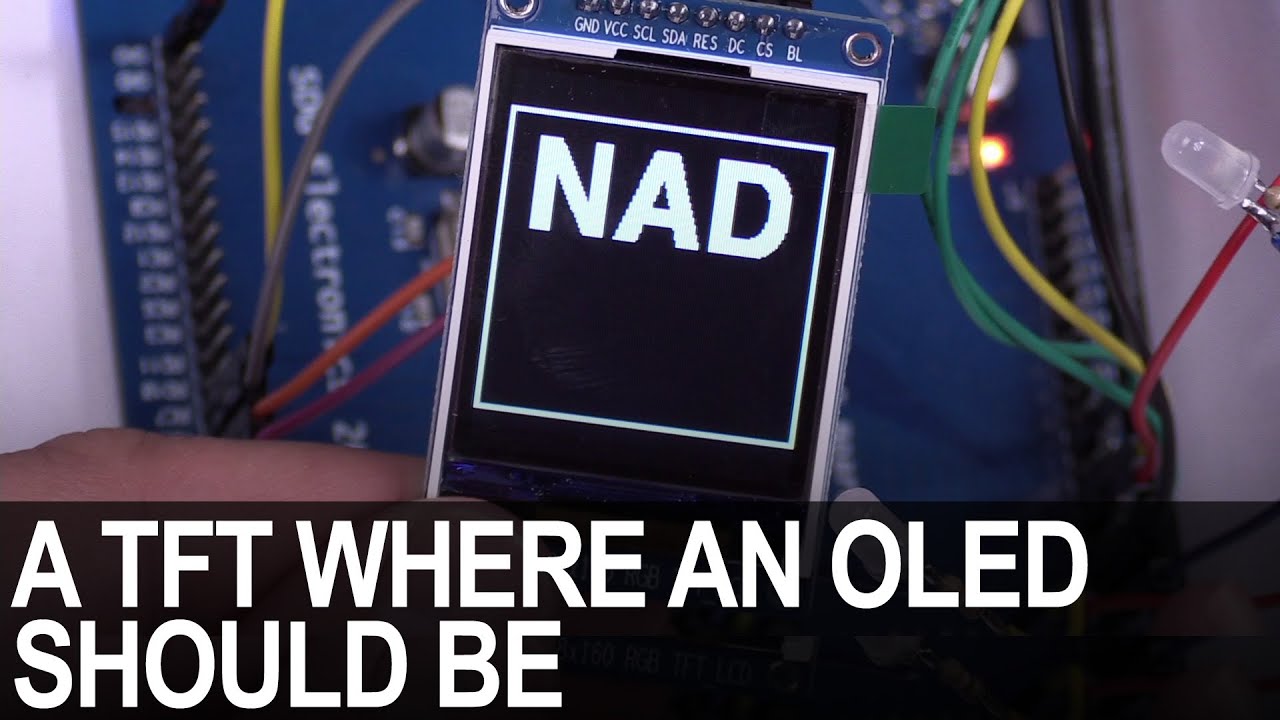
SDG #365 Reverse Engineering NAD D7050 OLED Replacement for IPS TFT
Decoding the NAD D7050's obsolete SSD1355 OLED protocol with a logic analyser, then driving an SSD1351 OLED and ST7735S IPS TFT as replacements.

SDG #360 Zero Crossing Detection and PCBWay 3D Prints
Testing PCBWay nylon PA12 and clear resin wall mounts for a Waveshare 4in ESP32-S3 touch dimmer, plus lower-power zero crossing detection options.