SDG #252 Heat loss energy savings for home ventilation
Extract fans and trickle ventilation keep a house healthy, but they quietly dump heat outside all winter. This episode starts with the arithmetic rather than assumptions: airflow rate, temperature differential and the specific heat capacity of air are used to put a real wattage figure on continuous ventilation, which then converts into a running cost and a payback window for heat recovery. That framing is the useful part, because it shows how quickly a modest airflow at a large indoor to outdoor differential becomes a meaningful load, and where a recovery or smarter control strategy actually justifies itself versus where it is merely gadgetry.
The hardware half covers a custom smart control board taken through PCB fabrication and SMD assembly, with the board arriving populated and ready for bring-up. Bring-up is where the interesting failures appear: the RS485 link does not behave, and the fault is traced with an oscilloscope on the differential pair rather than by guesswork in firmware. Attention settles on the 75176B transceiver, driver enable behaviour and bus termination, the classic points at which a half duplex link fails.
The repair itself is a good demonstration of technique. Two Metcal irons used together allow the offending part to be lifted cleanly without overheating the surrounding assembly, which is far more controlled than flooding a small SOIC with hot air next to connectors and plastics. Serial decode on the oscilloscope then confirms the corrected traffic, with the captured frames compared against the expected register and data tables.
For anyone building their own ventilation controller, the conclusions are practical: verify the physical layer before blaming code, and design the enable and termination scheme properly the first time.
More Electronics Projects

SDG #374 Smart Home Lighting: Adding Wireless DMX to My ESP32 Controller
Adding wireless DMX to an ESP32-S3 touch dimmer using ESP-NOW, with a 16-channel receiver, pairing, smoothing and scope-verified DMX output.
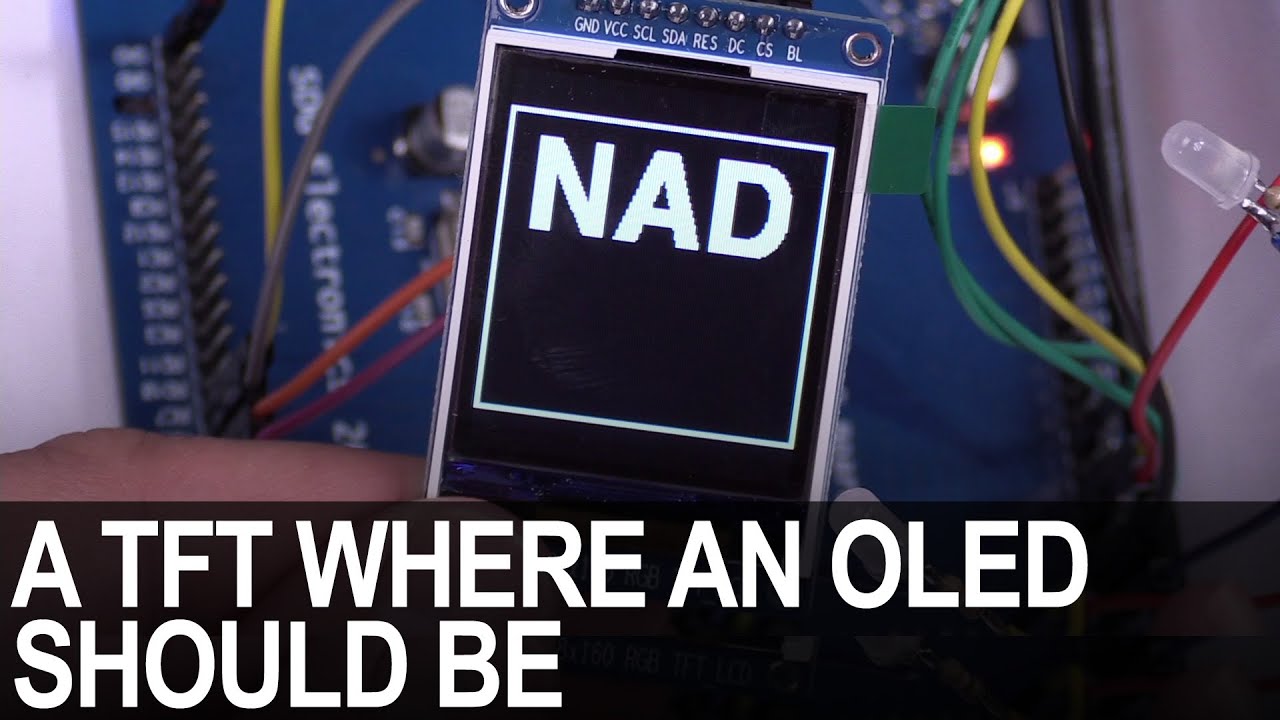
SDG #365 Reverse Engineering NAD D7050 OLED Replacement for IPS TFT
Decoding the NAD D7050's obsolete SSD1355 OLED protocol with a logic analyser, then driving an SSD1351 OLED and ST7735S IPS TFT as replacements.

SDG #360 Zero Crossing Detection and PCBWay 3D Prints
Testing PCBWay nylon PA12 and clear resin wall mounts for a Waveshare 4in ESP32-S3 touch dimmer, plus lower-power zero crossing detection options.