SDG #239 Investigating LED CCT shift with Resin/Conformal Coating
Potting or conformal coating an LED assembly is common practice for outdoor and marine lighting, but it raises a practical question: does the resin sitting directly on top of the emitter change the light coming out of it? This build and test session addresses that with a measured approach rather than visual judgement, using purpose made LED test PCBs that can be characterised, coated, and then re-measured under identical conditions.
The workflow covers the step most people get wrong, which is degassing. Freshly mixed epoxy carries entrained air, and pouring it straight over an LED dome leaves microbubbles that scatter light and look poor under magnification. A vacuum chamber and pump are used to extract the air before the pour, and the visual inspection stage shows how much difference that step makes to clarity and surface finish around the emitter.
The interesting data comes from the spectrometer comparison. Rather than relying on a subjective impression of warmth, the before and after traces show what actually happens to correlated colour temperature, spectral distribution and overall luminous output once resin is in the optical path. Any shift matters when matching fixtures, mixing coated and uncoated boards in the same installation, or specifying a CCT for a customer.
The conclusion for anyone building potted LED hardware is that the coating is not optically neutral, and the size of the effect is worth quantifying for each resin and LED combination before committing to a batch. It is also a useful reminder that a cheap spectrometer is a worthwhile bench instrument for lighting work.
More Electronics Projects

SDG #374 Smart Home Lighting: Adding Wireless DMX to My ESP32 Controller
Adding wireless DMX to an ESP32-S3 touch dimmer using ESP-NOW, with a 16-channel receiver, pairing, smoothing and scope-verified DMX output.
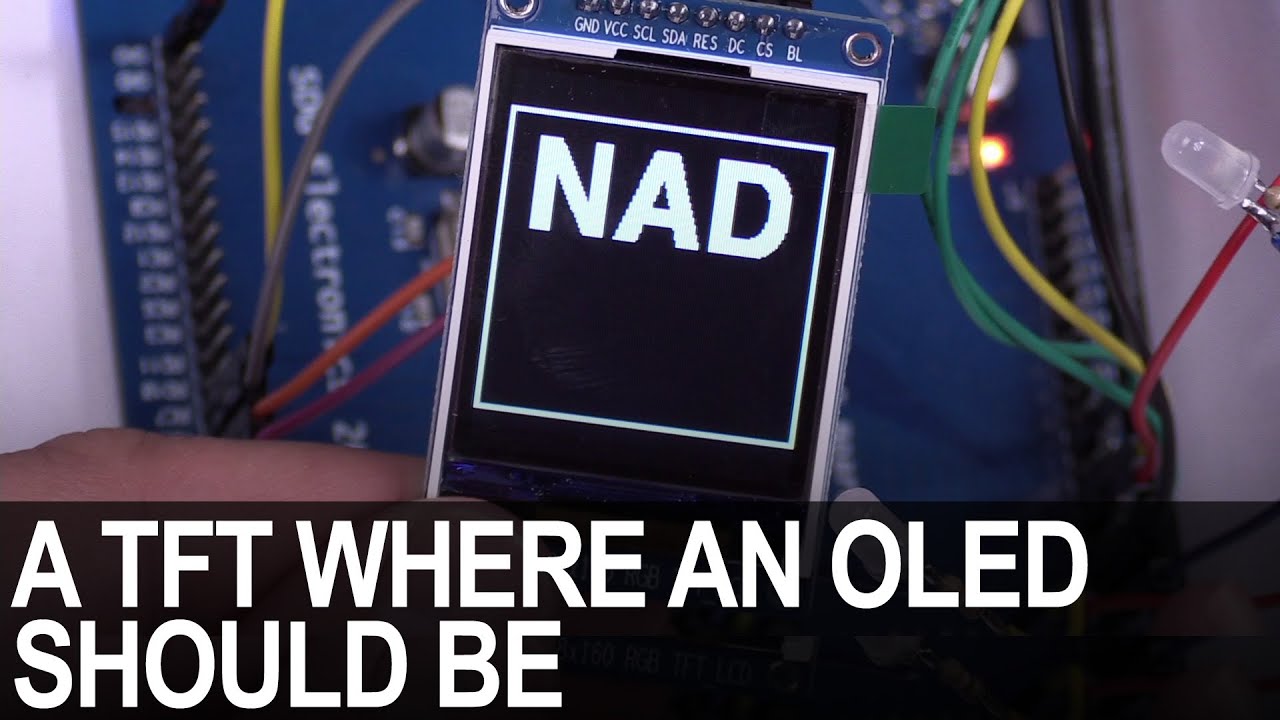
SDG #365 Reverse Engineering NAD D7050 OLED Replacement for IPS TFT
Decoding the NAD D7050's obsolete SSD1355 OLED protocol with a logic analyser, then driving an SSD1351 OLED and ST7735S IPS TFT as replacements.

SDG #360 Zero Crossing Detection and PCBWay 3D Prints
Testing PCBWay nylon PA12 and clear resin wall mounts for a Waveshare 4in ESP32-S3 touch dimmer, plus lower-power zero crossing detection options.