SDG #031 GPSDO & Clock Update - BST Ends
The end of British Summer Time is a genuinely useful annual test for any GPS referenced clock project, and that is exactly what this short update covers. A GPSDO (GPS disciplined oscillator) recovers time of day information from the satellite constellation alongside its frequency reference, but GPS itself broadcasts UTC, not local time. Any daylight saving behaviour has to be implemented in firmware, which means the interesting question is not whether the timekeeping is accurate but whether the timezone and DST logic was written correctly and actually fires on the right Sunday at the right hour.
This is worth understanding before buying or building a GPS clock. Many cheap modules and displays either ignore DST entirely, expect an offset to be set manually twice a year, or apply a hardcoded US style rule that shifts on the wrong dates for UK and European users. A unit that rolls back automatically at 02:00 local on the last Sunday of October is doing real work; one that needs manual intervention is really just a very accurate UTC clock with a manual adjustment.
The broader conclusion is that GPSDO accuracy claims and clock usability are separate things. The oscillator side provides a traceable frequency reference for test equipment calibration, while the displayed time depends entirely on the software layer above it. Anyone evaluating a GPSDO or a home built clock should check the DST handling and the timezone configuration before assuming that the display will take care of itself.
More Electronics Projects

SDG #374 Smart Home Lighting: Adding Wireless DMX to My ESP32 Controller
Adding wireless DMX to an ESP32-S3 touch dimmer using ESP-NOW, with a 16-channel receiver, pairing, smoothing and scope-verified DMX output.
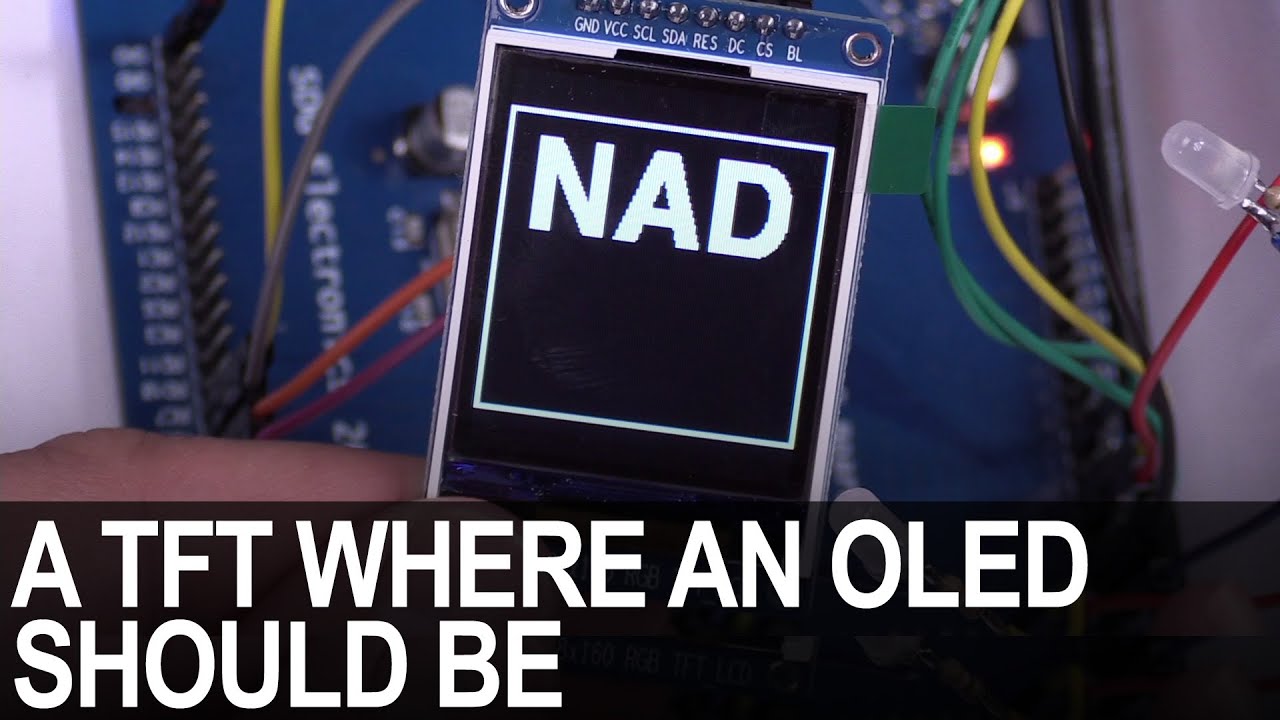
SDG #365 Reverse Engineering NAD D7050 OLED Replacement for IPS TFT
Decoding the NAD D7050's obsolete SSD1355 OLED protocol with a logic analyser, then driving an SSD1351 OLED and ST7735S IPS TFT as replacements.

SDG #360 Zero Crossing Detection and PCBWay 3D Prints
Testing PCBWay nylon PA12 and clear resin wall mounts for a Waveshare 4in ESP32-S3 touch dimmer, plus lower-power zero crossing detection options.