SDG #263 How to modify the output voltage of a SMPSU power supply
Off the shelf switch mode supplies rarely provide exactly the rail a project needs, and buying a bespoke unit is often expensive or slow. This build works through the practical middle ground: understanding the feedback network inside a typical isolated SMPSU and changing the divider so that the supply regulates at a different voltage.
The starting point is the adjustment trimmer found on quality units such as the Traco Power 24V modules, which typically offers only a few percent of trim around the nominal figure. That is adequate for compensating cable drop, but useless for a substantially different rail. A teardown of a cheaper supply shows why: the secondary side reference, usually a TL431 shunt regulator driving an optocoupler back to the primary controller, sets the output through a simple resistor divider tied to the 2.5V reference pin. Moving that divider makes the whole loop settle elsewhere.
The calculation is straightforward once the divider is identified, but the video is useful because it flags the points that catch people out. Output capacitor voltage ratings, secondary rectifier reverse voltage, transformer turns ratio headroom and the controller’s duty cycle limits all constrain how far a supply can be pushed before it becomes unreliable or unsafe. Modest changes are realistic; doubling the output generally is not.
After fitting the recalculated resistors, the modified supply is loaded and measured to confirm that regulation holds. For anyone repurposing surplus units or tuning a rail for a specific project, this is a repeatable technique rather than a one off modification, provided the component ratings involved are respected.
More Electronics Projects

SDG #374 Smart Home Lighting: Adding Wireless DMX to My ESP32 Controller
Adding wireless DMX to an ESP32-S3 touch dimmer using ESP-NOW, with a 16-channel receiver, pairing, smoothing and scope-verified DMX output.
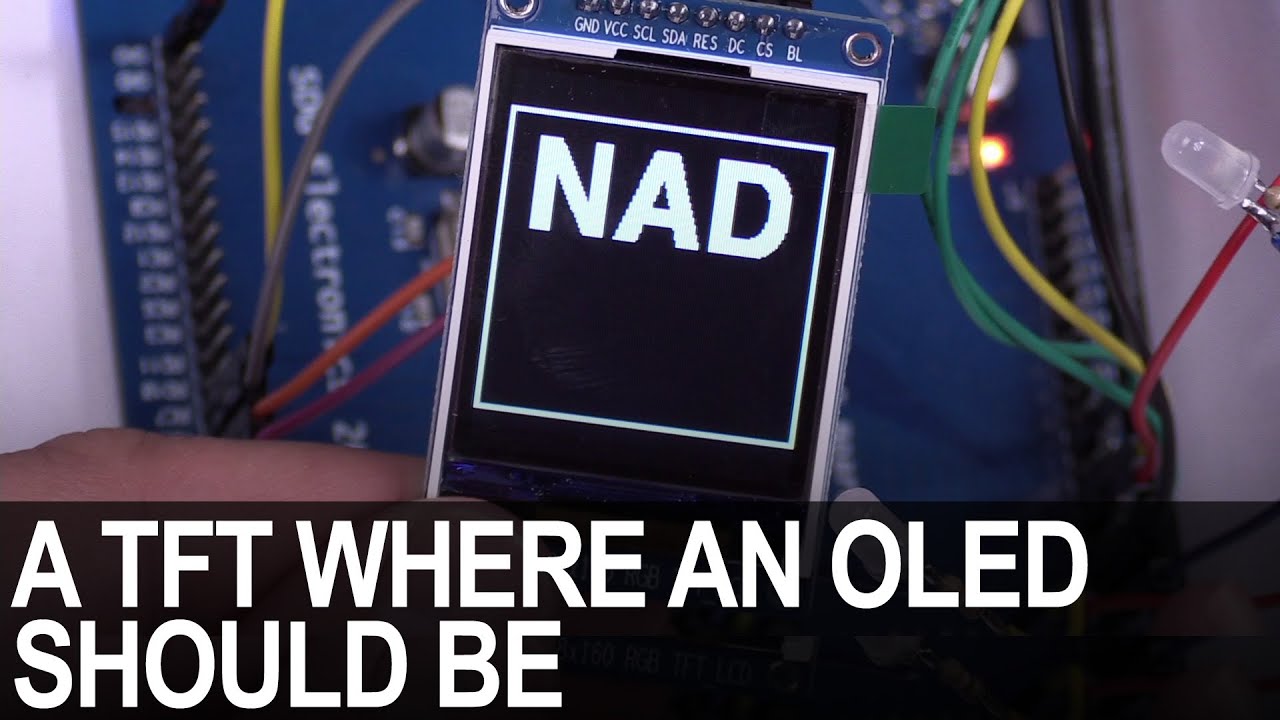
SDG #365 Reverse Engineering NAD D7050 OLED Replacement for IPS TFT
Decoding the NAD D7050's obsolete SSD1355 OLED protocol with a logic analyser, then driving an SSD1351 OLED and ST7735S IPS TFT as replacements.

SDG #360 Zero Crossing Detection and PCBWay 3D Prints
Testing PCBWay nylon PA12 and clear resin wall mounts for a Waveshare 4in ESP32-S3 touch dimmer, plus lower-power zero crossing detection options.