SDG #293 AC-DC Converter using the Power Integrations LNK3204 SMPSU IC
This is the second entry in a mains power supply design series, replacing an earlier capacitive dropper with a proper switching regulator built around the Power Integrations LNK3204P LinkSwitch-TN2. The goal is modest but practical: a 5V rail at roughly 150mA from 85 to 265VAC, with 3.3V derived through a linear regulator, intended for a low power wireless sensor node.
The design walkthrough is genuinely useful for anyone who has never used Power Integrations’ tooling. PI Expert is not supported for this part, so the spreadsheet based PIXls tool does the main work, and the reference design documentation supplies the schematic that the spreadsheet omits. One notable engineering decision is deliberately overriding the tool’s inductance suggestion: the efficiency optimised value produced impractically short switching times, so 2.2mH was chosen instead, at the cost of 3.2 ohms of DC resistance.
Testing is done properly rather than casually. Because this is a non-isolated buck topology with the output referenced to the rectified mains, differential probes are mandatory, and the live conductor is wound five times through the current probe to convert a 10A range into a more usable 2A range. Measurements across load steps show clean regulation from around 85V upward, roughly a quarter of a watt of no load draw, and peak efficiency near 67 percent, lower than hoped and partly attributed to inductor resistance, freewheeling diode losses and the indicator LEDs.
At roughly $3.83 in components, with the controller itself under 40 cents, it undercuts the capacitive dropper approach while behaving far better at light loads. The obvious caveat remains: nothing on the output can ever be touched, which sets up the isolated flyback design that follows.
More Electronics Projects

SDG #374 Smart Home Lighting: Adding Wireless DMX to My ESP32 Controller
Adding wireless DMX to an ESP32-S3 touch dimmer using ESP-NOW, with a 16-channel receiver, pairing, smoothing and scope-verified DMX output.
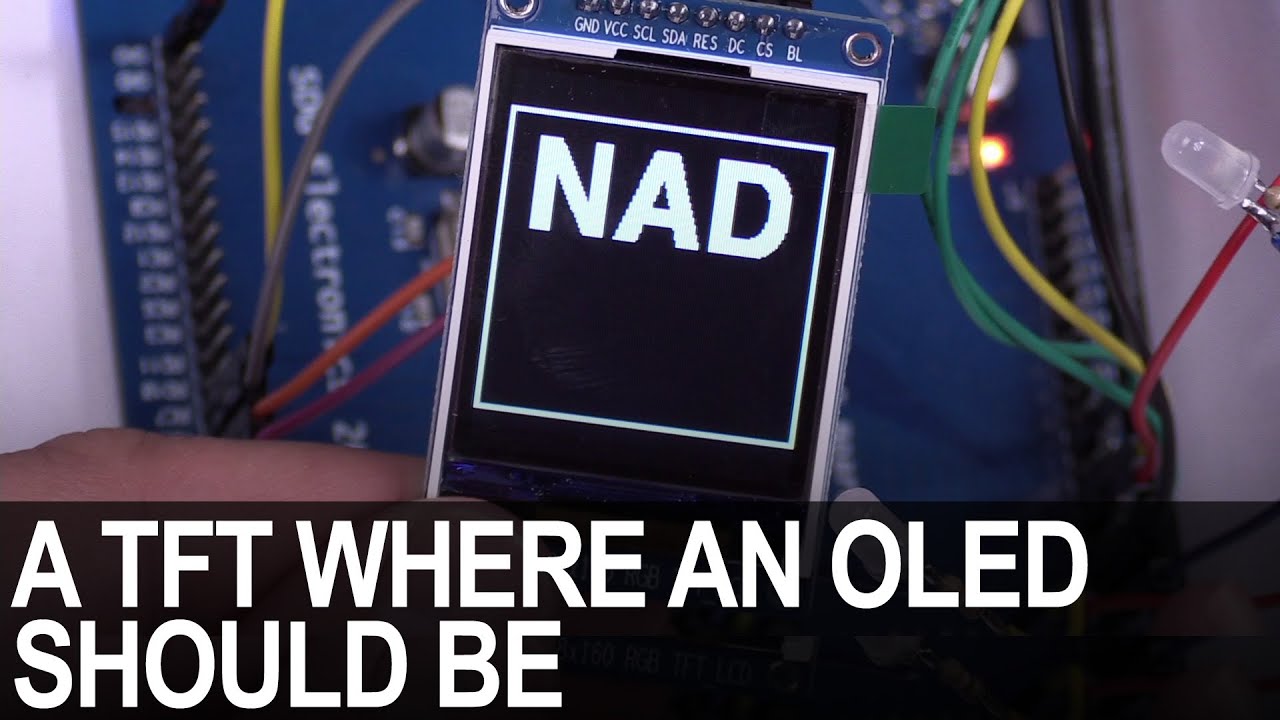
SDG #365 Reverse Engineering NAD D7050 OLED Replacement for IPS TFT
Decoding the NAD D7050's obsolete SSD1355 OLED protocol with a logic analyser, then driving an SSD1351 OLED and ST7735S IPS TFT as replacements.

SDG #360 Zero Crossing Detection and PCBWay 3D Prints
Testing PCBWay nylon PA12 and clear resin wall mounts for a Waveshare 4in ESP32-S3 touch dimmer, plus lower-power zero crossing detection options.