SDG #095 MLCC Capacitors Values Not What You Think?! Tests on MLCC
Multilayer ceramic capacitors are the default choice for decoupling, filtering and bulk storage in modern designs, yet the value printed on the reel is often the most optimistic figure the part will ever produce. This episode puts a spread of 0805 MLCCs on the bench and measures what they genuinely deliver once real operating conditions are applied, rather than trusting the datasheet headline.
The core issue examined is DC bias derating. Class 2 dielectrics such as X5R and X7R rely on ferroelectric ceramics whose permittivity falls as the applied field increases, so a capacitor that measures close to its marked value at zero volts can lose a large fraction of its capacitance by the time it sees a working voltage well inside its rating. The tests show how severe that loss becomes on physically small packages and high capacitance per volume parts, and how a higher voltage rating or a larger case size restores stability. Class 1 dielectrics such as C0G/NP0 are used as the reference point, since they stay effectively flat across bias but cannot reach the same capacitance densities.
For anyone specifying parts, the practical conclusions are worth more than the individual figures: assume derating rather than hoping to avoid it, treat tolerance and temperature coefficient as separate problems from bias loss, and be sceptical of cheap unbranded capacitor assortment books where the actual dielectric grade is unknown. Bulk decoupling, DC-DC output filters and timing or filter networks each demand a different level of caution, and this testing makes clear where a nominally correct BOM value can quietly leave a design short of the capacitance it needs.
More Electronics Projects

SDG #374 Smart Home Lighting: Adding Wireless DMX to My ESP32 Controller
Adding wireless DMX to an ESP32-S3 touch dimmer using ESP-NOW, with a 16-channel receiver, pairing, smoothing and scope-verified DMX output.
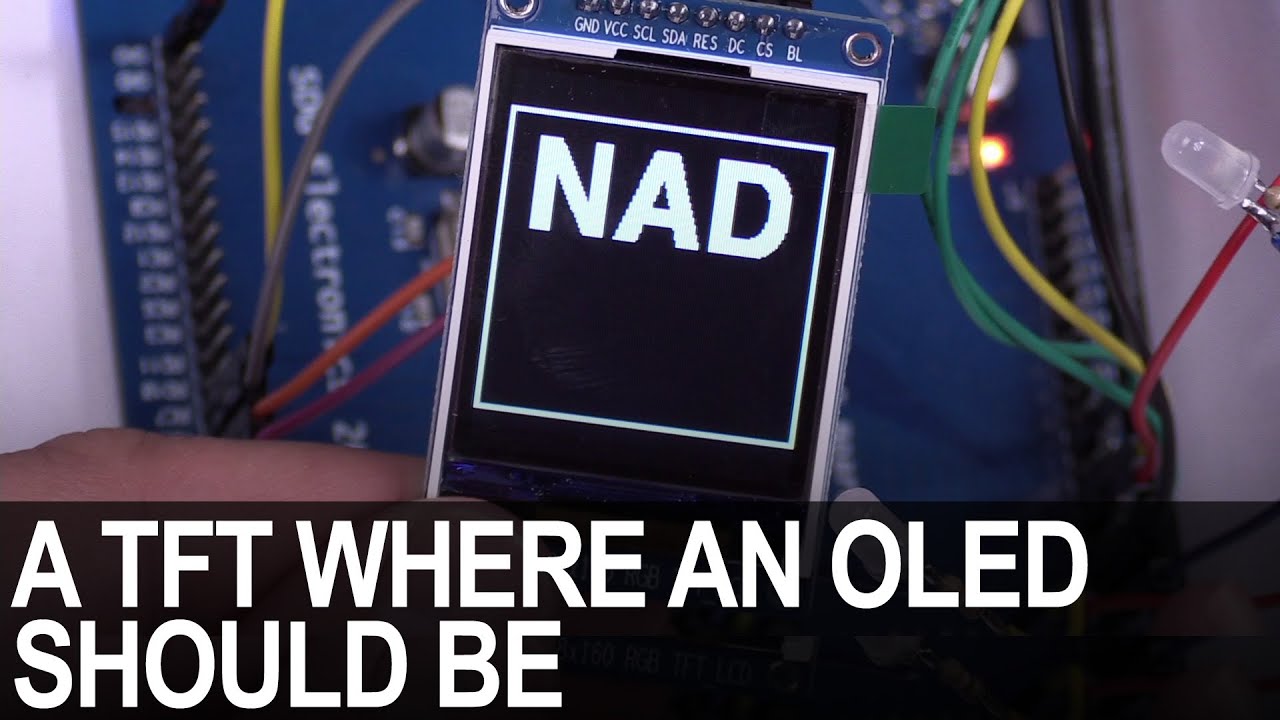
SDG #365 Reverse Engineering NAD D7050 OLED Replacement for IPS TFT
Decoding the NAD D7050's obsolete SSD1355 OLED protocol with a logic analyser, then driving an SSD1351 OLED and ST7735S IPS TFT as replacements.

SDG #360 Zero Crossing Detection and PCBWay 3D Prints
Testing PCBWay nylon PA12 and clear resin wall mounts for a Waveshare 4in ESP32-S3 touch dimmer, plus lower-power zero crossing detection options.