SDG #320 Zigbee mmWave GHz Radar Sensor Teardown for Modifications
Cheap Zigbee mmWave presence sensors have become a popular alternative to PIR modules for home automation, mostly because radar can detect a stationary person sitting still in a room. This project takes one of those low cost AliExpress modules apart to see exactly what hardware the money buys, and then sets about improving it rather than simply reviewing it.
The teardown covers the radar front end, the Zigbee radio module and the supporting power supply circuitry, along with how the antenna is implemented on the PCB itself. That matters because radar sensitivity, detection distance and false triggering all depend heavily on antenna layout and the shielding around it, and it is the sort of detail that separates a usable presence sensor from one that reports movement every time the heating comes on.
Before any modification, the sensor is paired through a Zigbee coordinator and tested in Home Assistant to establish a baseline: what entities it exposes, how quickly occupancy clears, and how configurable the sensitivity and hold time actually are. That gives a reference point for judging whether the changes are worthwhile.
The second half moves into design work, laying out a retrofit PCB intended to fit the original enclosure while replacing the stock electronics with something more flexible and better suited to the intended installation. The board is then prepared for fabrication. For anyone considering these sensors, the useful outcome is a realistic picture of the internals, their limitations, and where a modest redesign can pay off.
More Electronics Projects

SDG #374 Smart Home Lighting: Adding Wireless DMX to My ESP32 Controller
Adding wireless DMX to an ESP32-S3 touch dimmer using ESP-NOW, with a 16-channel receiver, pairing, smoothing and scope-verified DMX output.
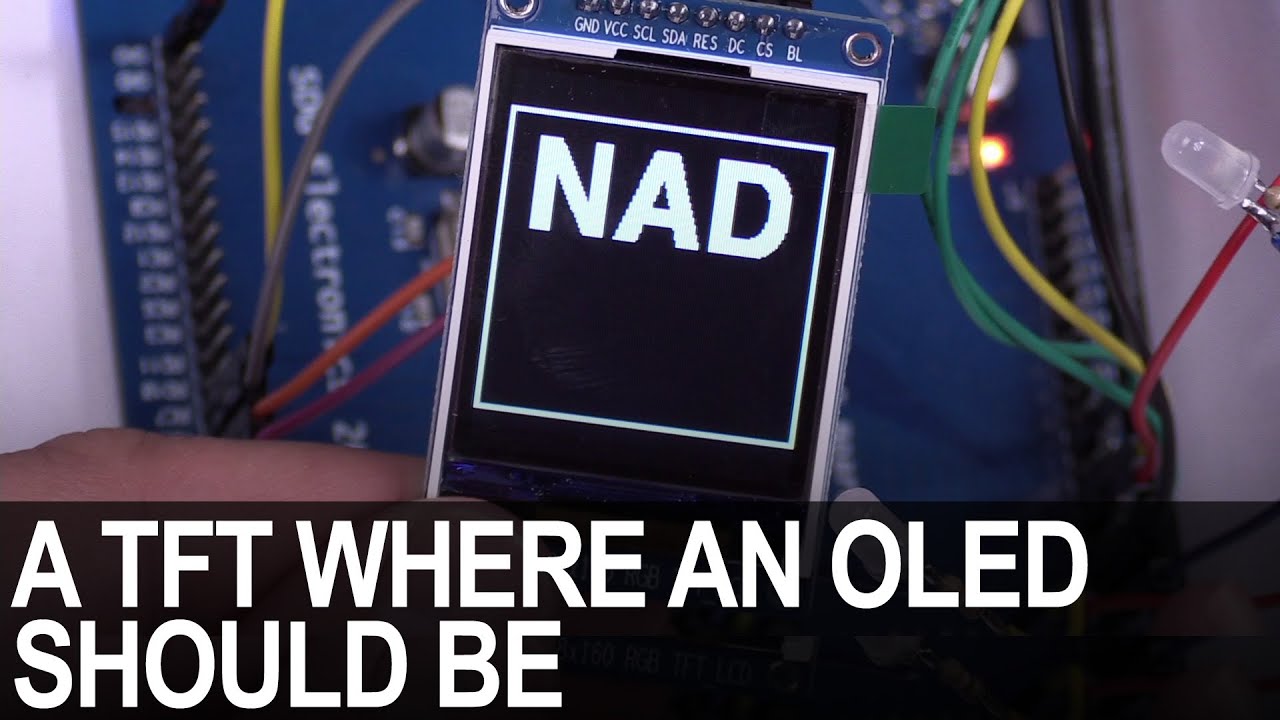
SDG #365 Reverse Engineering NAD D7050 OLED Replacement for IPS TFT
Decoding the NAD D7050's obsolete SSD1355 OLED protocol with a logic analyser, then driving an SSD1351 OLED and ST7735S IPS TFT as replacements.

SDG #360 Zero Crossing Detection and PCBWay 3D Prints
Testing PCBWay nylon PA12 and clear resin wall mounts for a Waveshare 4in ESP32-S3 touch dimmer, plus lower-power zero crossing detection options.