SDG #331 GVM H3 - Why did we not get 80W output power?
The GVM H3 is marketed as an 80W portable soldering station, but bench measurements told a different story, and this follow-up examines why the figures never added up. Rather than taking the headline figure at face value, the investigation works back through the whole power chain: what the supply can actually deliver, what the drive electronics will pass to the tip, and how the firmware behaves once the cartridge starts drawing current.
The key point for buyers is that peak wattage on a box is only meaningful if the station can sustain it into a real heater under load. A cartridge iron only benefits from high power during the initial heat-up and during recovery when a large thermal mass draws heat from the tip. If the control loop or the supply rail limits current before that happens, the extra headroom is simply not available, and the iron behaves like a considerably lower wattage tool whatever the specification claims. Oscilloscope captures of the drive waveform are the honest way to settle this, because average delivered power, not instantaneous peaks, is what melts solder.
The conclusion applies across the whole category of low cost USB-C and DC powered soldering stations: quoted wattage figures are frequently theoretical maximums derived from supply capability rather than verified output at the tip. For a portable iron intended for anything beyond light through hole and small SMD work, thermal recovery under real load is the specification that matters, and it is one that only measurement, not marketing, can confirm.
More Soldering Iron Reviews

SDG #373 Ultimate Precision Soldering Setup – Metcal Micro-Fine Iron & Tweezers + PCBWay PCBs
Hands-on with Metcal's MX-H9 micro-fine soldering iron and MX-H10 tweezers: cartridge range, microscope ergonomics, 01005 rework and JBC comparisons.
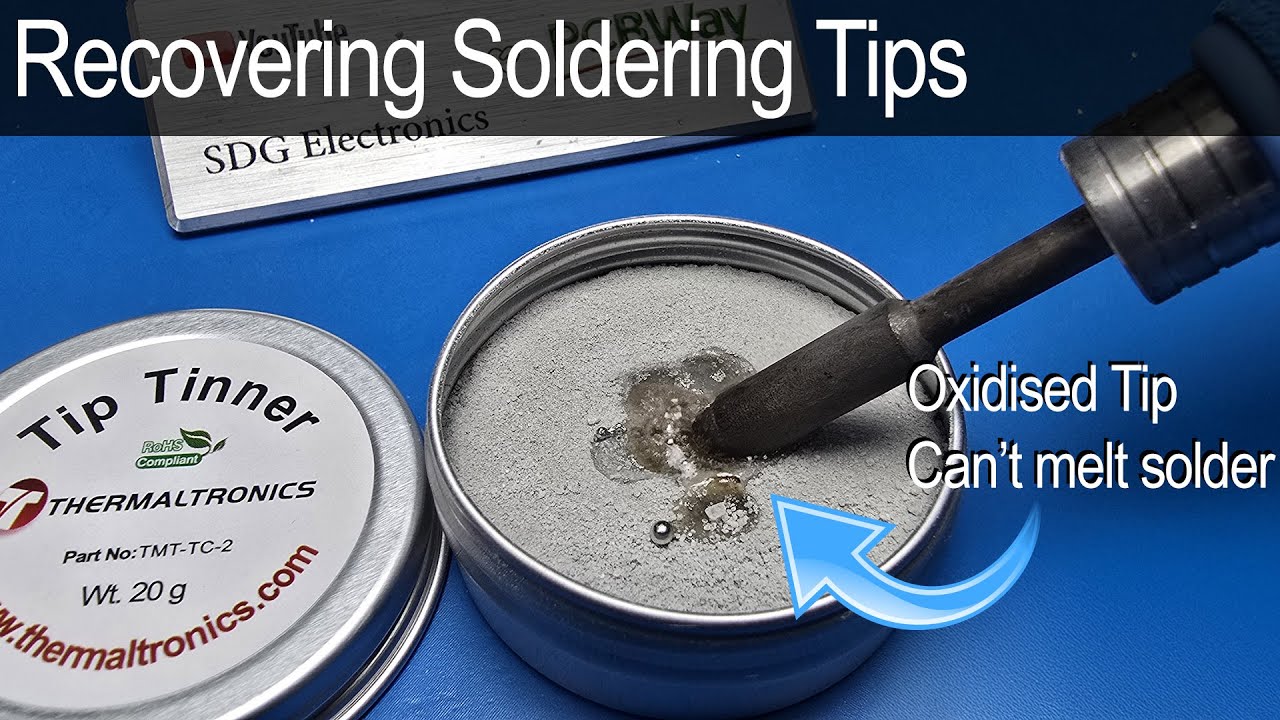
SDG #372 Solder Not Melting? Here’s Why (and How to Fix Your Iron Tip)
Damp sponge, brass wool, JBC Inox wool, rosin, tip tinner and sal ammoniac tested on badly oxidized soldering tips. See what actually works.

SDG #371 Geeboon HC24 Low Cost High Power Soldering System for JBC handpieces.
Testing the Geeboon HC24 SMPS soldering station with T470, T245 and T115 JBC handpieces: teardown, calibration, tip leakage, firmware fix and fan noise.