SDG #373 Ultimate Precision Soldering Setup – Metcal Micro-Fine Iron & Tweezers + PCBWay PCBs
Metcal’s micro fine range is a deliberately narrow product: the MX-H9 handpiece and MX-H10 tweezers exist for fine pitch SMD rework performed under a microscope, and this review judges them on that basis rather than as general purpose irons. The headline advantage is physical: both handpieces are unusually short and light, which matters enormously when working in the few centimetres of clearance under a stereo microscope objective. Compared with a JBC 245 handpiece, the difference in bulk and cable drag is obvious, and the H9 feels closer to the smaller T115 class tools while still running on Metcal’s inductive heating cartridges.
Cartridge choice is the other half of the story. The micro fine family spans roughly 0.3 mm conical tips through bent conicals, hoof, slotted and 1.2 mm chisel geometries, which covers everything from fine pitch IC pins to small drag soldering. The practical trade-off is thermal mass: these cartridges are tiny, so on dense multilayer motherboards and phone PCBs with heavy ground planes the iron can be dragged down, and a preheater becomes less of a luxury than a requirement. Buyers wanting one iron for connectors, ground pours and through hole work should stay with a larger handpiece and keep the micro fine equipment as a second tool.
The tweezers are tested across a wide component range, from 1206 down to 01005, and compared against Metcal’s larger PTZ Talon style unit and JBC’s AM120. Also worth noting for existing owners: there are MX and CV (Connection Validation) variants, so station compatibility needs checking before ordering, and Thermaltronics base stations are also relevant. Custom PCBs used in the demonstrations were supplied by PCBWay, this video’s sponsor.
More Soldering Iron Reviews
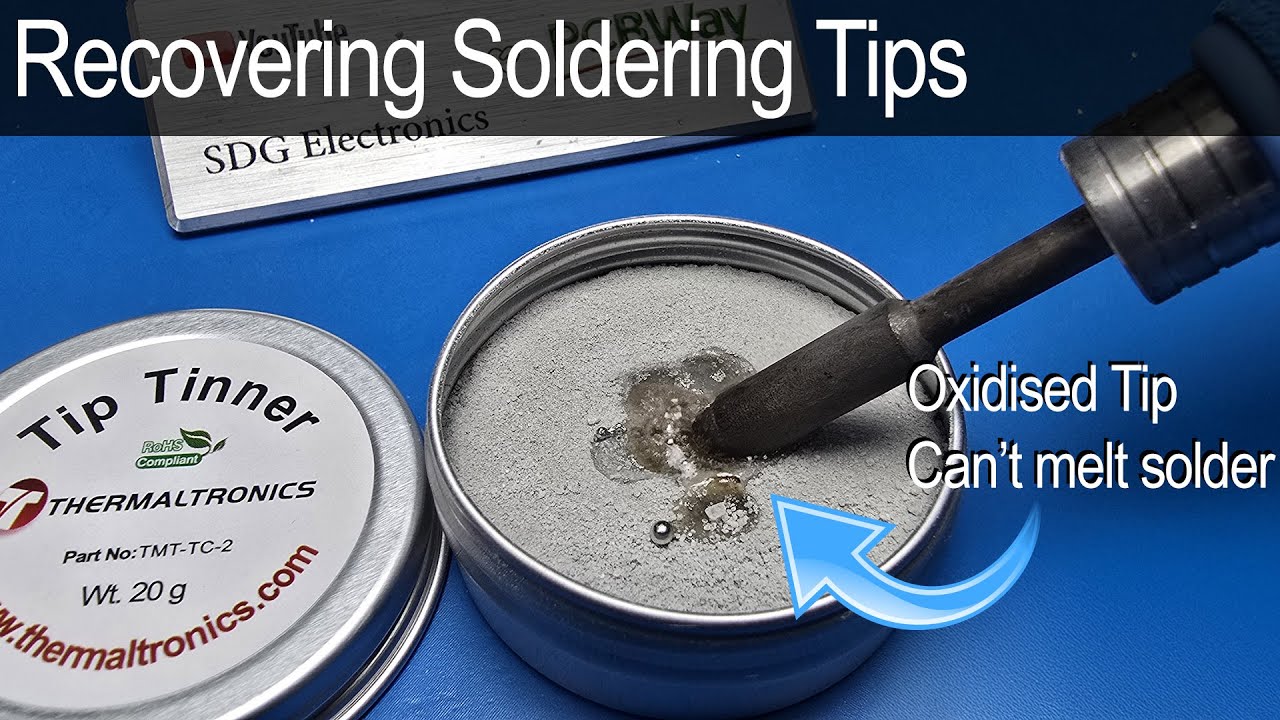
SDG #372 Solder Not Melting? Here’s Why (and How to Fix Your Iron Tip)
Damp sponge, brass wool, JBC Inox wool, rosin, tip tinner and sal ammoniac tested on badly oxidized soldering tips. See what actually works.

SDG #371 Geeboon HC24 Low Cost High Power Soldering System for JBC handpieces.
Testing the Geeboon HC24 SMPS soldering station with T470, T245 and T115 JBC handpieces: teardown, calibration, tip leakage, firmware fix and fan noise.

Geeboon HA310 destroys components (it doesn't) #electronicscreators #beaplumbertheysaid
Testing the claim that a 400W soldering station destroys electronics. A full kit assembled with an oversized tip on the Geeboon HA310, with C210 support too.