SDG #127 Testing out a 15 kV Inverter for a Simple ESD Simulator
Electrostatic discharge testing is normally the preserve of expensive certified ESD guns, so this episode examines whether a low cost high voltage inverter module, sold on the usual marketplaces as a 15 kV generator, can serve as the basis of a home built ESD simulator. The starting point is characterising the module itself: the supply voltage and current it actually draws, the output it produces once loaded, and how far the claimed 15 kV figure holds up under load rather than as a no-load specification.
The practical problem with these small inverters is that they are designed for arc lighters and ioniser duty, not for charging a defined capacitance to a defined voltage. That matters because an ESD event of the type described in IEC 61000-4-2 is a specific waveform, driven by a storage capacitor in the region of 150 pF discharged through a series resistance of around 330 ohms into the device under test. Measuring the output is also awkward, since a standard multimeter or scope probe will not survive kilovolts and will load the source enough to distort the reading, so a suitably rated high voltage divider is needed before any of the numbers are meaningful.
The conclusion concerns expectations. A cheap inverter with a carefully chosen capacitor and resistor network can provide a repeatable, roughly controlled discharge that is genuinely useful for provoking latch-ups, resets and ESD sensitive input pins during development. It will not give compliance grade results, but as a workshop tool for finding faults before a product goes to a test house, the cost is low relative to the benefit. Safety discipline around stored charge and creepage distances is essential.
More Electronics Projects

SDG #374 Smart Home Lighting: Adding Wireless DMX to My ESP32 Controller
Adding wireless DMX to an ESP32-S3 touch dimmer using ESP-NOW, with a 16-channel receiver, pairing, smoothing and scope-verified DMX output.
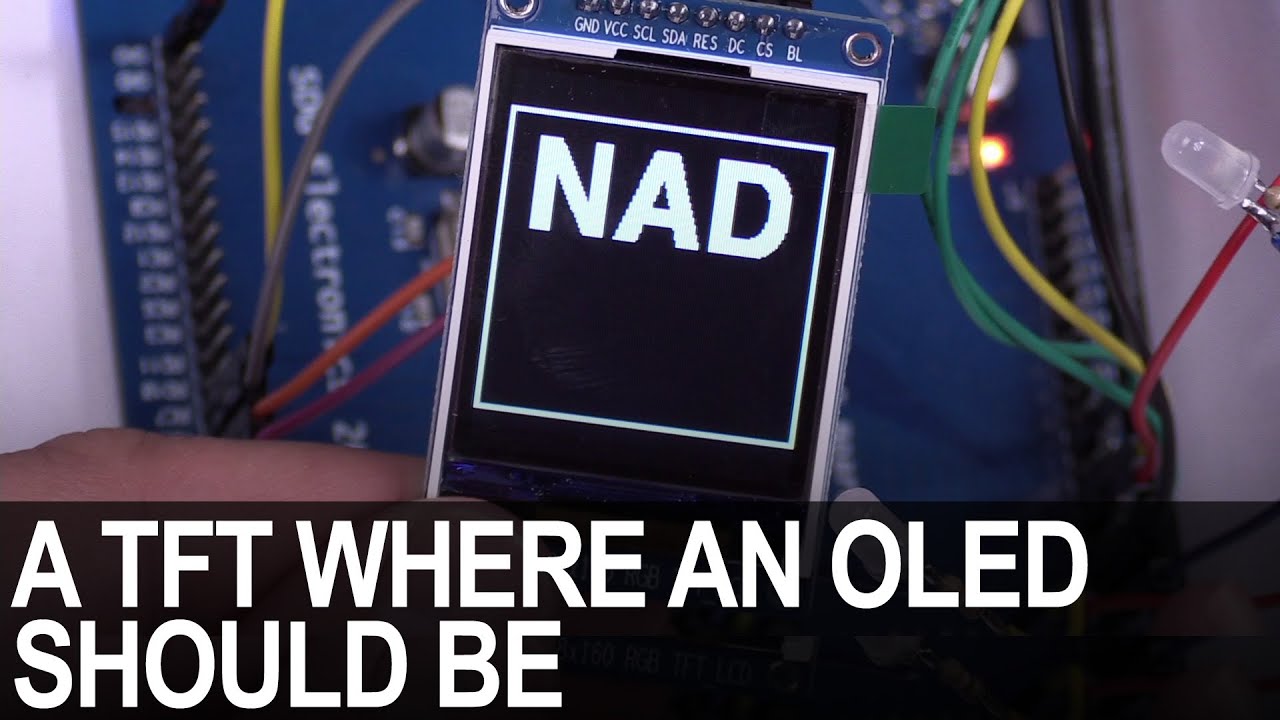
SDG #365 Reverse Engineering NAD D7050 OLED Replacement for IPS TFT
Decoding the NAD D7050's obsolete SSD1355 OLED protocol with a logic analyser, then driving an SSD1351 OLED and ST7735S IPS TFT as replacements.

SDG #360 Zero Crossing Detection and PCBWay 3D Prints
Testing PCBWay nylon PA12 and clear resin wall mounts for a Waveshare 4in ESP32-S3 touch dimmer, plus lower-power zero crossing detection options.