SDG #128 Infra-red Remote Protocols and LED Lighting - With new PCBs from JLCPCB
This episode continues an LED night light project, moving it from breadboard theory to a properly fabricated board, and uses the build as an opportunity to examine how infrared remote controls actually encode data.
The infrared section is the most instructive part. Rather than treating a remote as a black box handled by a library, the signal is captured and examined directly so that the carrier frequency, header burst and bit encoding scheme become visible. That matters practically: knowing whether a remote uses pulse distance, pulse width or a bi-phase scheme determines how decoding firmware is written or configured, and understanding the 38kHz carrier explains why demodulating receiver modules behave as they do near fluorescent lighting or in strong sunlight. Anyone who has struggled with an unreliable IR link will recognise why measuring first saves hours of guesswork.
On the hardware side, the discussion covers driving LEDs properly for a lighting application, where constant current control and dimming behaviour matter far more than simply adding a series resistor. Low brightness dimming performance is where cheap designs fail, so the choice of driving method and PWM approach deserves attention from anyone copying the design.
The project also demonstrates the value of turning a working prototype into a small run of professionally fabricated boards. For a project with mixed through hole and surface mount parts, a proper PCB removes the wiring faults that make prototype debugging ambiguous, and it makes the finished night light something that can be installed in a room rather than left on the bench.
More Electronics Projects

SDG #374 Smart Home Lighting: Adding Wireless DMX to My ESP32 Controller
Adding wireless DMX to an ESP32-S3 touch dimmer using ESP-NOW, with a 16-channel receiver, pairing, smoothing and scope-verified DMX output.
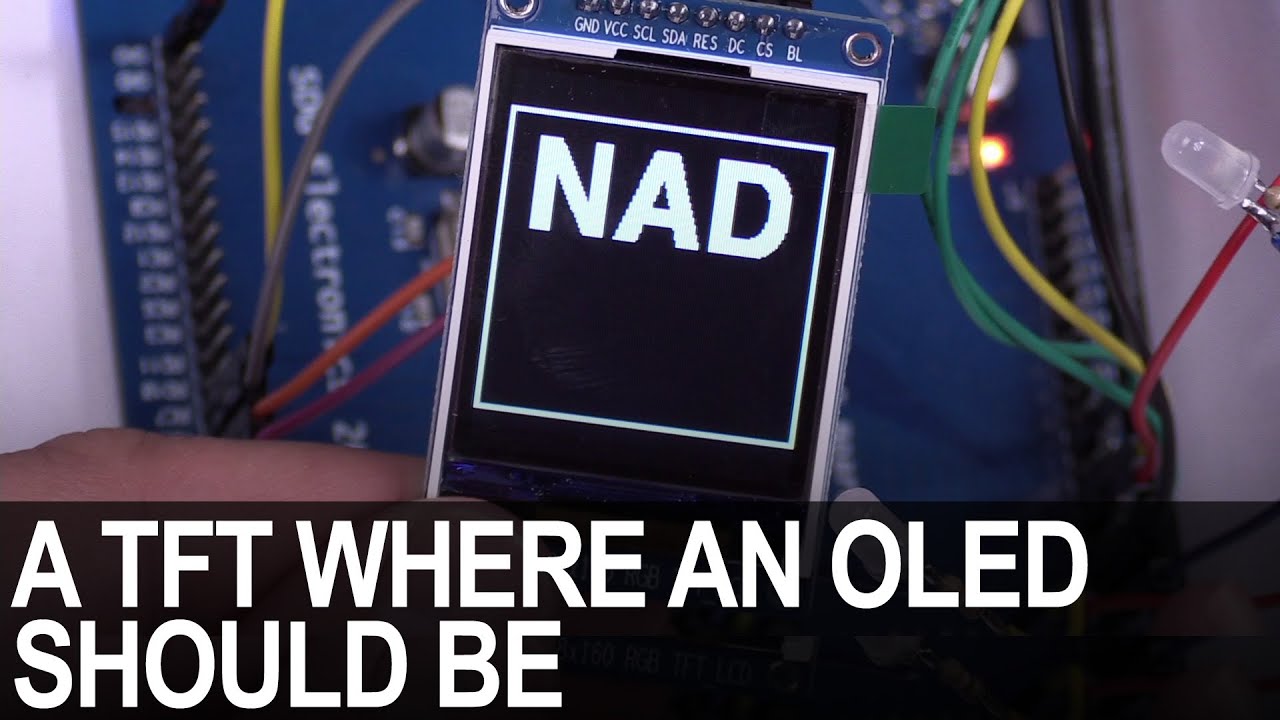
SDG #365 Reverse Engineering NAD D7050 OLED Replacement for IPS TFT
Decoding the NAD D7050's obsolete SSD1355 OLED protocol with a logic analyser, then driving an SSD1351 OLED and ST7735S IPS TFT as replacements.

SDG #360 Zero Crossing Detection and PCBWay 3D Prints
Testing PCBWay nylon PA12 and clear resin wall mounts for a Waveshare 4in ESP32-S3 touch dimmer, plus lower-power zero crossing detection options.