SDG #245 Design of a 60W Synchronous LED driver and Current Density Modelling in PDN Analyzer
This episode works through the schematic and layout decisions behind a 60 W synchronous LED driver, a design that trades the simplicity of a diode based buck for the efficiency of a MOSFET low side switch. At these power levels the loss budget matters: a Schottky diode dropping half a volt at several amps wastes real watts and produces heat that has nowhere to go on a compact board, so synchronous rectification with careful gate drive is the sensible route rather than an optimisation for its own sake.
The layout discussion is the more broadly applicable part. Current density in the switching loop, copper pour width, thermal spreading and where the return currents actually flow are all examined rather than assumed, which is the difference between a driver that runs warm and one that overheats its own regulator. PDN Analyzer is used as a modelling tool to visualise DC voltage drop and current concentration across the polygons, highlighting necking points around vias and pad clearances that are easy to miss when judging a plane by eye.
For anyone designing high current LED drivers or similar buck converters, the point is that plane analysis catches problems earlier and more cheaply than a thermal camera on a populated prototype. The episode also shows the limits of the tool: PDN Analyzer handles DC distribution, not the AC switching loop inductance that dominates ringing and EMI, so it complements rather than replaces good switching node layout. It is a useful reference for judging whether copper pours are genuinely adequate rather than merely generous in appearance.
More Electronics Projects

SDG #374 Smart Home Lighting: Adding Wireless DMX to My ESP32 Controller
Adding wireless DMX to an ESP32-S3 touch dimmer using ESP-NOW, with a 16-channel receiver, pairing, smoothing and scope-verified DMX output.
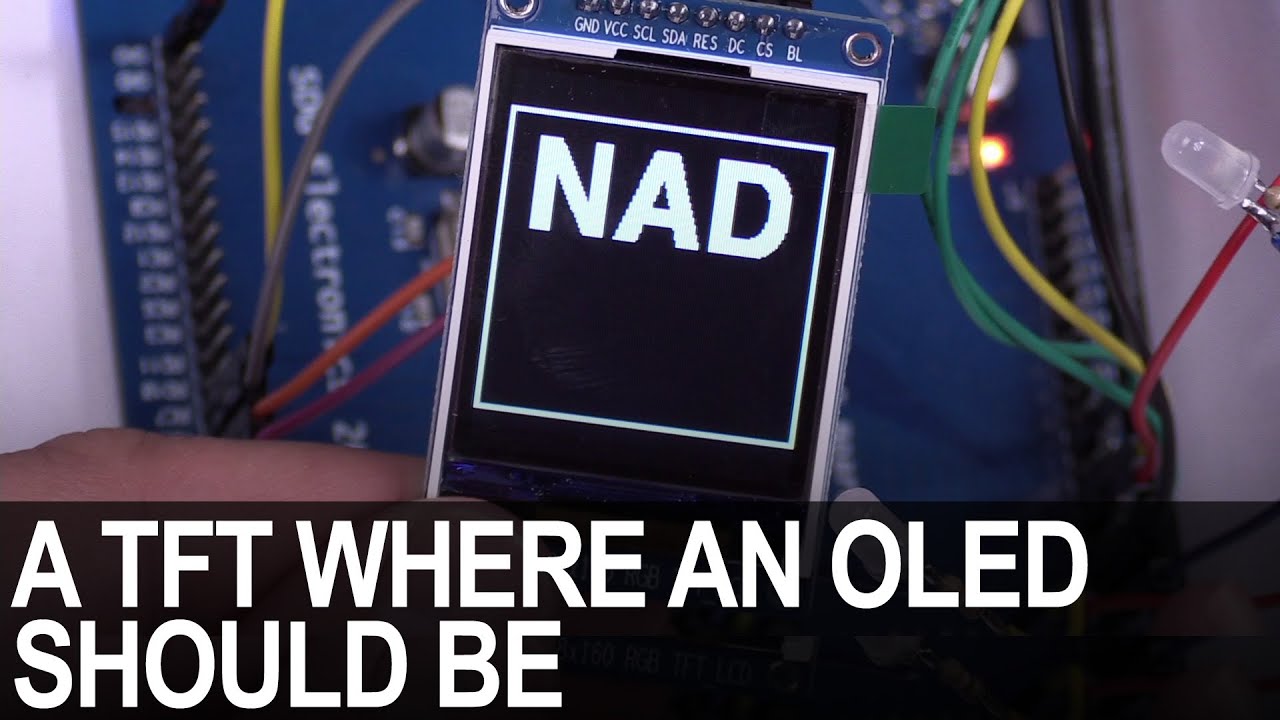
SDG #365 Reverse Engineering NAD D7050 OLED Replacement for IPS TFT
Decoding the NAD D7050's obsolete SSD1355 OLED protocol with a logic analyser, then driving an SSD1351 OLED and ST7735S IPS TFT as replacements.

SDG #360 Zero Crossing Detection and PCBWay 3D Prints
Testing PCBWay nylon PA12 and clear resin wall mounts for a Waveshare 4in ESP32-S3 touch dimmer, plus lower-power zero crossing detection options.