SDG #171 Potential circuit issues killing the AL8805 LED Drivers
This episode is a fault finding post mortem on the AL8805 buck LED driver used in the high output microscope ring light project, and it doubles as a primer on why cheap hysteretic LED drivers fail in the field. Rather than blaming the silicon outright, the investigation works through the surrounding circuit conditions that can push the part outside its safe operating area.
The main suspects are inductor selection and saturation behaviour, which directly set peak switch current and can drive the internal MOSFET well beyond its rating during transients; switch node ringing and voltage overshoot that can exceed the absolute maximum input rating even when the nominal supply looks safe; and the interaction between input capacitance, supply lead inductance and hot plug events, which is a classic cause of failure in small integrated switchers. Thermal derating also receives attention, since the AL8805 in a small package has limited dissipation headroom once it is pushed toward its current ceiling with several LEDs in series.
Layout recurs as a theme, particularly the loop area on the high side of the converter and the placement of the current sense resistor and feedback path. Poor routing turns an otherwise adequate design into one that fails intermittently, which matches the pattern of drivers that work on the bench and then fail later.
For anyone building their own LED lighting, the practical conclusions are to specify inductors on saturation current rather than inductance value alone, add input protection or damping if the supply is long or switched, and leave real margin on both current and voltage instead of designing to the datasheet limits.
More Electronics Projects

SDG #374 Smart Home Lighting: Adding Wireless DMX to My ESP32 Controller
Adding wireless DMX to an ESP32-S3 touch dimmer using ESP-NOW, with a 16-channel receiver, pairing, smoothing and scope-verified DMX output.
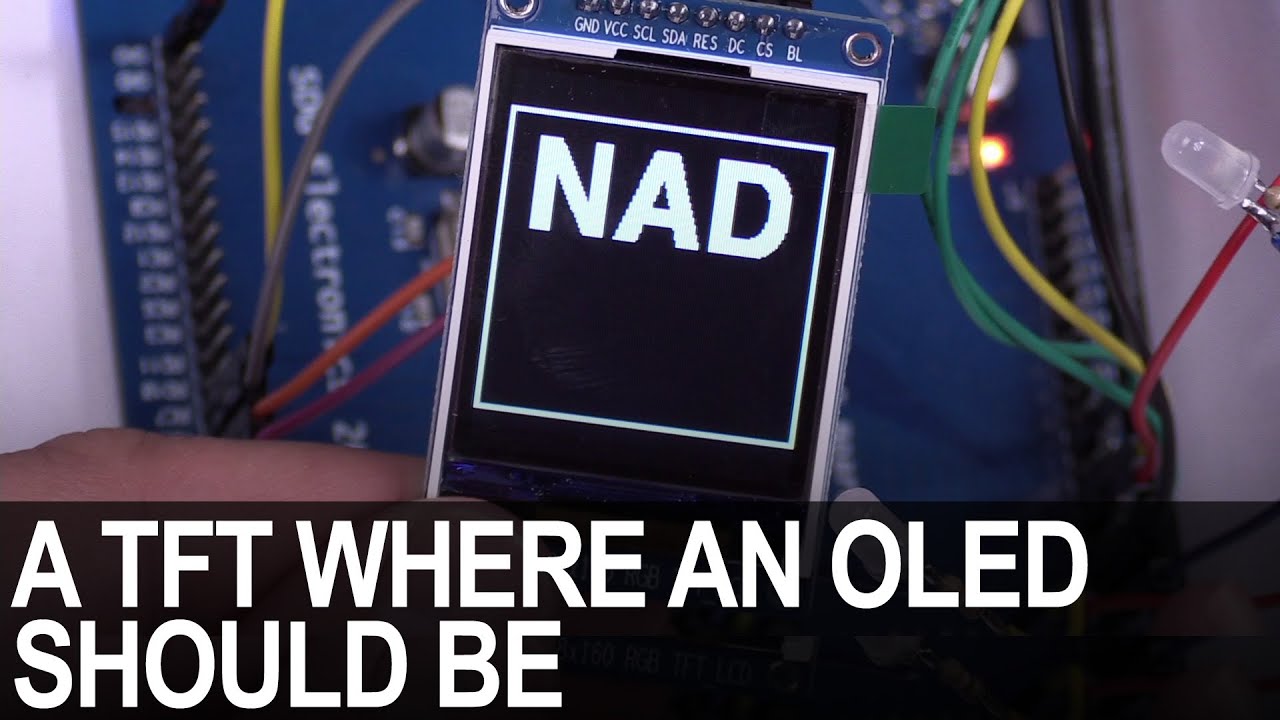
SDG #365 Reverse Engineering NAD D7050 OLED Replacement for IPS TFT
Decoding the NAD D7050's obsolete SSD1355 OLED protocol with a logic analyser, then driving an SSD1351 OLED and ST7735S IPS TFT as replacements.

SDG #360 Zero Crossing Detection and PCBWay 3D Prints
Testing PCBWay nylon PA12 and clear resin wall mounts for a Waveshare 4in ESP32-S3 touch dimmer, plus lower-power zero crossing detection options.