SDG #217 FULL BRIDGE RECTIFIERS and some alternative technologies for high efficiency
Full bridge rectifiers are one of the least glamorous parts in a power supply, and also one of the most wasteful. This build examines what is actually given up by fitting a generic bridge, then compares it against two higher efficiency routes: discrete Schottky diodes and active rectification using MOSFETs driven by dedicated controller ICs.
The test vehicle is a small custom PCB, populated by pick and place so that each variant is assembled to the same standard and measured under comparable conditions. That matters, because forward voltage drop is only half the story. A silicon bridge with two conducting junctions in series at any instant loses roughly 1.4 V to 2 V in total, which at even modest currents becomes watts of heat, a heatsink, and a thermal budget to design around. Schottky parts cut that drop noticeably but bring higher reverse leakage and a tighter voltage ceiling. Ideal diode and active rectifier controllers driving low RDS(on) MOSFETs can push conduction losses lower still, at the cost of part count, board area and a control IC that has to switch cleanly at line frequency.
The cost breakdown deserves attention. A commodity bridge costs pennies; a four MOSFET active stage plus controllers is an order of magnitude more expensive and more complex to lay out. The measured results show where that expenditure is justified, generally at higher current, low input voltage or in sealed enclosures where dissipating heat is the real constraint, and where a plain bridge remains the sensible engineering choice.
More Electronics Projects

SDG #374 Smart Home Lighting: Adding Wireless DMX to My ESP32 Controller
Adding wireless DMX to an ESP32-S3 touch dimmer using ESP-NOW, with a 16-channel receiver, pairing, smoothing and scope-verified DMX output.
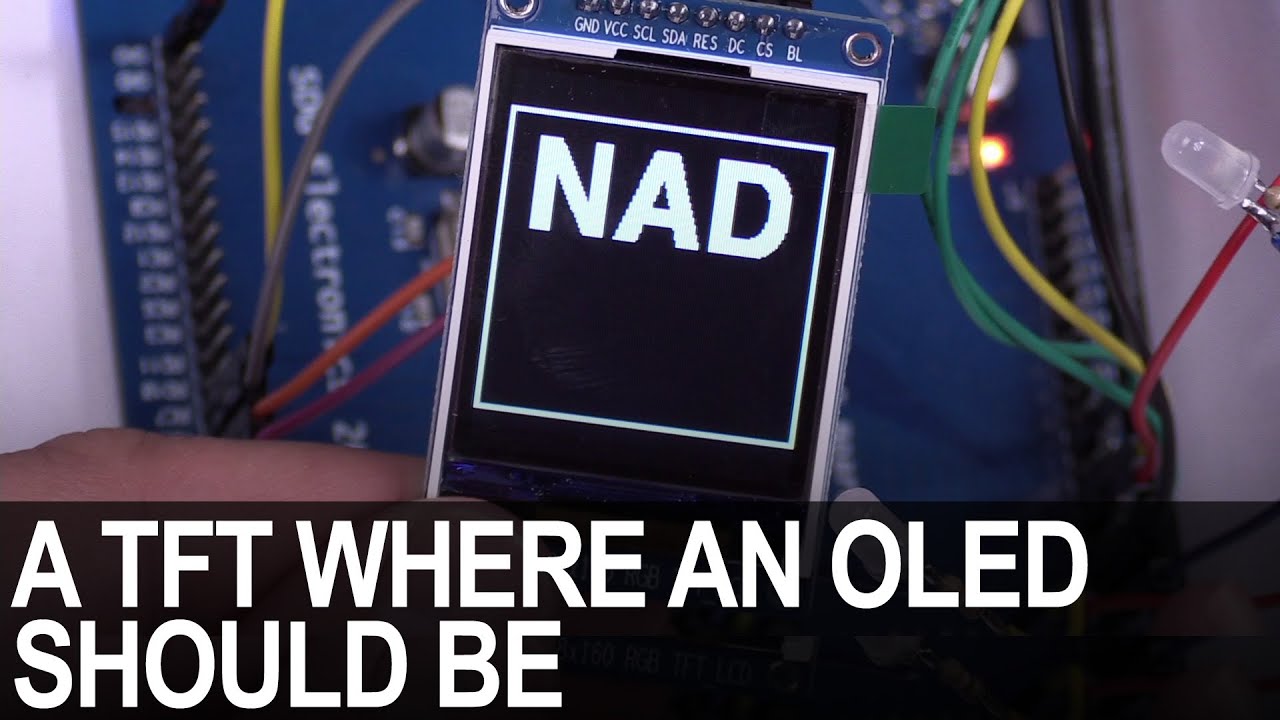
SDG #365 Reverse Engineering NAD D7050 OLED Replacement for IPS TFT
Decoding the NAD D7050's obsolete SSD1355 OLED protocol with a logic analyser, then driving an SSD1351 OLED and ST7735S IPS TFT as replacements.

SDG #360 Zero Crossing Detection and PCBWay 3D Prints
Testing PCBWay nylon PA12 and clear resin wall mounts for a Waveshare 4in ESP32-S3 touch dimmer, plus lower-power zero crossing detection options.