SDG #044 Making some cheap RGB colour changing Christmas lights
Old incandescent fairy light strings are worth keeping, and this project shows why: the wiring harness, moulded lamp holders and inline plug are all reusable, so the only real work is replacing the filament bulbs with modern RGB colour changing LEDs and arranging a suitable drive scheme.
The engineering interest is in the driver. Rather than a transformer or a switch mode supply, the string relies on a capacitive dropper, where a series capacitor’s reactance at mains frequency limits current into the LED chain. It is a cheap and reasonably efficient approach, which is exactly why it appears in low cost commercial light sets, but it comes with important caveats. The output is not isolated from mains, so every LED and every joint in the string sits at a potentially lethal potential; inrush limiting and a bleed resistor matter; and an X rated capacitor is essential if the circuit is to fail safely. Anyone recreating this needs to treat the whole assembly as live and insulate accordingly.
The result is a practical assessment of build effort against outcome. Self flashing RGB LEDs provide the colour cycling behaviour with no microcontroller, no addressable data line and no separate low voltage supply, at the cost of any real control over the sequencing. For a decorative string that is a sensible trade. Where synchronised patterns or per pixel control are wanted, an isolated supply feeding addressable LEDs is the better path, and this build makes clear where that line falls.
More Electronics Projects

SDG #374 Smart Home Lighting: Adding Wireless DMX to My ESP32 Controller
Adding wireless DMX to an ESP32-S3 touch dimmer using ESP-NOW, with a 16-channel receiver, pairing, smoothing and scope-verified DMX output.
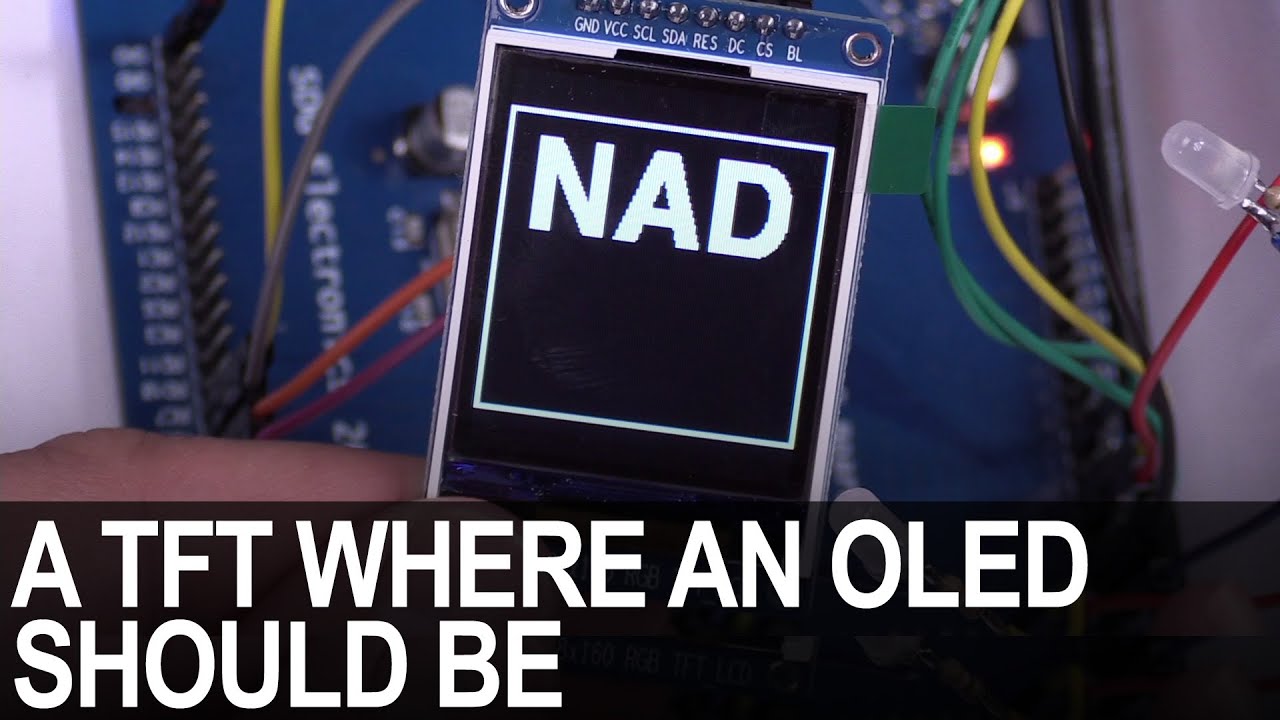
SDG #365 Reverse Engineering NAD D7050 OLED Replacement for IPS TFT
Decoding the NAD D7050's obsolete SSD1355 OLED protocol with a logic analyser, then driving an SSD1351 OLED and ST7735S IPS TFT as replacements.

SDG #360 Zero Crossing Detection and PCBWay 3D Prints
Testing PCBWay nylon PA12 and clear resin wall mounts for a Waveshare 4in ESP32-S3 touch dimmer, plus lower-power zero crossing detection options.