SDG #327 Testing the ESP32 WLED High Power LED Board
This episode takes a custom ESP32 based WLED controller board from bare PCB to working hardware, and then puts the high power LED driver section under real scrutiny rather than simply declaring it functional.
Assembly is handled with solder paste and a reflow cycle, which is the sensible approach for a board of this density. The first power-up is treated cautiously, checking that the regulator and ESP32 come up before anything is trusted, and only then is WLED flashed and configured. That firmware choice matters for anyone considering a similar design: WLED brings web based control, effects and network integration essentially for free, so the interesting engineering work shifts entirely to the driver hardware behind it.
The most useful part of the build is the driver validation. Rather than assuming that the constant current stage behaves, the board is exercised across brightness levels while thermal imaging tracks where heat actually accumulates. Thermal work like this is the fastest way to spot an undersized inductor, a hot switching device or a copper pour that is not doing its job, all of which show long before a part fails outright. Oscilloscope captures then confirm what the PWM dimming and switching waveforms look like in practice, which reveals whether the driver is running cleanly or whether there is ringing and noise that could cause visible flicker or EMI problems.
For anyone designing their own WLED hardware, the conclusion is that the firmware side is the easy part. Verified thermal headroom and clean switching behaviour are what separate a board that works on the bench from one that survives continuous use, and this build shows how to check both.
More Electronics Projects

SDG #374 Smart Home Lighting: Adding Wireless DMX to My ESP32 Controller
Adding wireless DMX to an ESP32-S3 touch dimmer using ESP-NOW, with a 16-channel receiver, pairing, smoothing and scope-verified DMX output.
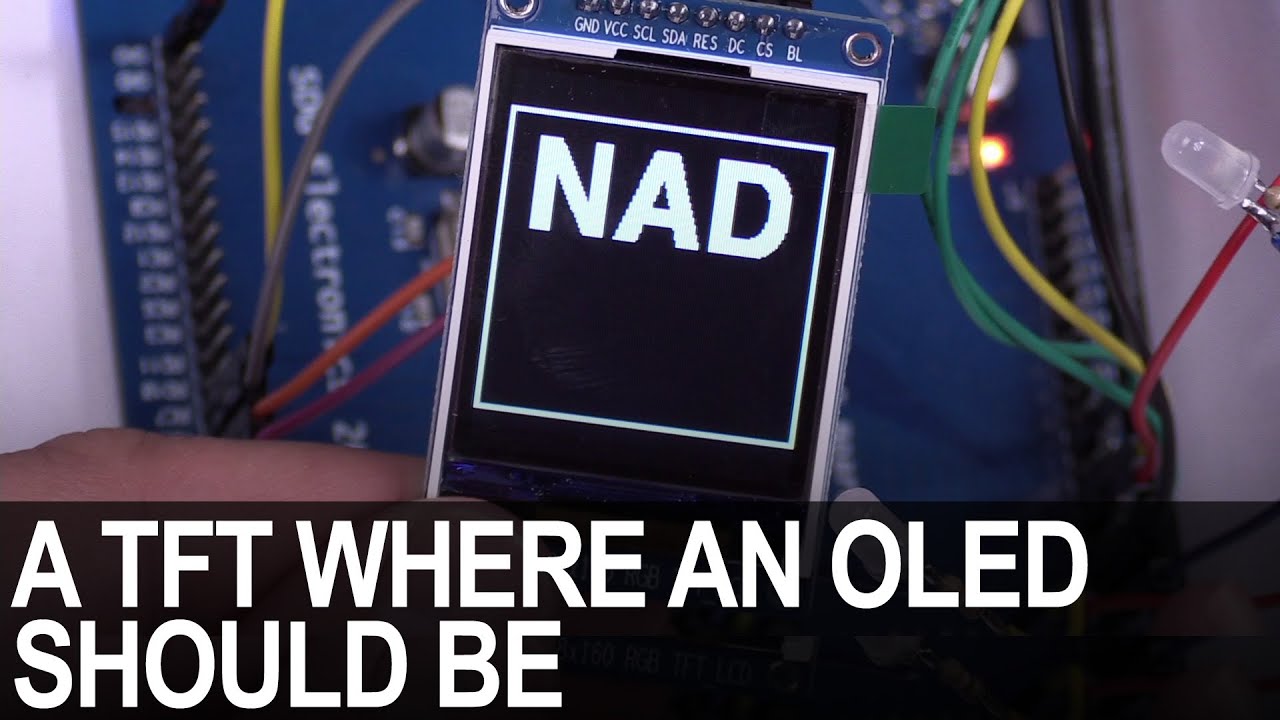
SDG #365 Reverse Engineering NAD D7050 OLED Replacement for IPS TFT
Decoding the NAD D7050's obsolete SSD1355 OLED protocol with a logic analyser, then driving an SSD1351 OLED and ST7735S IPS TFT as replacements.

SDG #360 Zero Crossing Detection and PCBWay 3D Prints
Testing PCBWay nylon PA12 and clear resin wall mounts for a Waveshare 4in ESP32-S3 touch dimmer, plus lower-power zero crossing detection options.