SDG #159 Getting 10.000000000 MHz from the GPSDO using an FPGA and MCU
A GPS disciplined oscillator locks its OCXO to GPS time, but that does not automatically mean the front panel output is at exactly 10 MHz. Because the control loop is steering the oscillator to minimise phase error against the 1PPS signal, the instantaneous frequency wanders slightly either side of nominal, and the DAC or EFC resolution limits how finely it can be adjusted. That leaves a small but measurable offset that matters when the GPSDO is used as a frequency reference rather than purely as a timing source.
This project addresses the problem the same way commercial instruments such as the SRS FS740 do: instead of relying on the oscillator alone, the raw OCXO output is fed into an FPGA that performs fractional division and synthesis, so that the output frequency can be corrected in tiny increments under software control. An MCU handles the housekeeping, monitoring the phase measurement from the time interval counter and adjusting the FPGA’s division parameters to keep the synthesised output at the correct value over long averaging periods.
The practical conclusion for anyone building a Lars style Arduino GPSDO is that the existing hardware can be taken considerably further with a digital synthesis stage added. The trade-offs are worth understanding: fractional division introduces jitter and spurs that a clean analogue OCXO output does not have, so there is a real tension between absolute frequency accuracy and short term phase noise. Which one is optimised depends entirely on whether the reference is calibrating counters or feeding a low phase noise RF chain.
More Electronics Projects

SDG #374 Smart Home Lighting: Adding Wireless DMX to My ESP32 Controller
Adding wireless DMX to an ESP32-S3 touch dimmer using ESP-NOW, with a 16-channel receiver, pairing, smoothing and scope-verified DMX output.
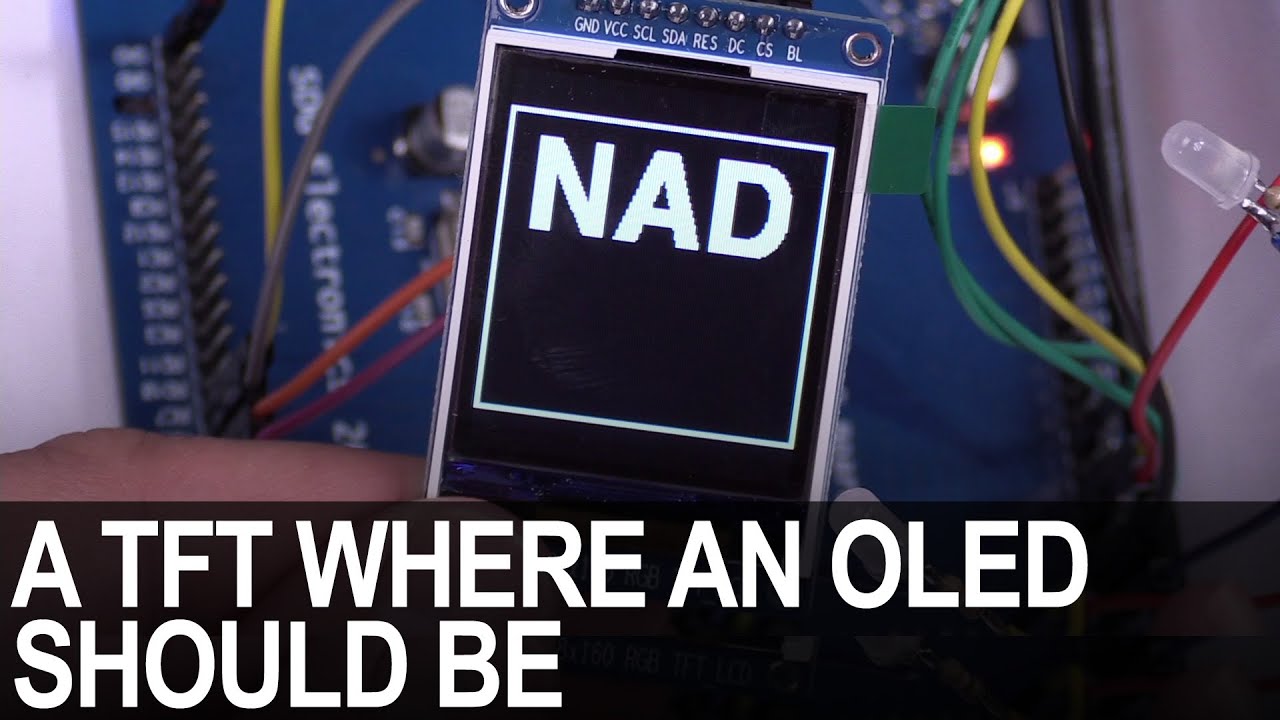
SDG #365 Reverse Engineering NAD D7050 OLED Replacement for IPS TFT
Decoding the NAD D7050's obsolete SSD1355 OLED protocol with a logic analyser, then driving an SSD1351 OLED and ST7735S IPS TFT as replacements.

SDG #360 Zero Crossing Detection and PCBWay 3D Prints
Testing PCBWay nylon PA12 and clear resin wall mounts for a Waveshare 4in ESP32-S3 touch dimmer, plus lower-power zero crossing detection options.