SDG #135 Finishing the IR Controllable LED Nightlights
This episode completes the IR controllable LED nightlight project, taking the design from bare boards to a working, remote controlled unit. Rather than a product review, it is a build and bring-up log: assembling the custom PCB, populating the LED array and driver components, and then checking that the infrared receiver, microcontroller and dimming behaviour interact as the design intended.
The practical value is in the details that only appear once hardware exists. Getting an IR receiver to decode a cheap remote reliably depends on placement, ambient light rejection and clean supply decoupling, and LED brightness control depends on whether the dimming is done by current regulation or PWM, each with its own trade-offs for flicker and efficiency at low levels. The build also covers the realities of hand assembling a small SMD board with paste, flux and hot air, an approach that is far more forgiving than it looks once the process is established.
For anyone considering adapting the idea, the conclusion is that a nightlight is a deceptively good beginner to intermediate project: low voltage and low risk, but it still exercises PCB layout, microcontroller firmware, IR protocol decoding, LED drive and enclosure fit. Comparing a home built version against an off the shelf commercial nightlight also makes clear where the mass produced units cut corners, particularly on dimming quality and standby behaviour, and where a custom board can genuinely do better for the same parts cost.
More Electronics Projects

SDG #374 Smart Home Lighting: Adding Wireless DMX to My ESP32 Controller
Adding wireless DMX to an ESP32-S3 touch dimmer using ESP-NOW, with a 16-channel receiver, pairing, smoothing and scope-verified DMX output.
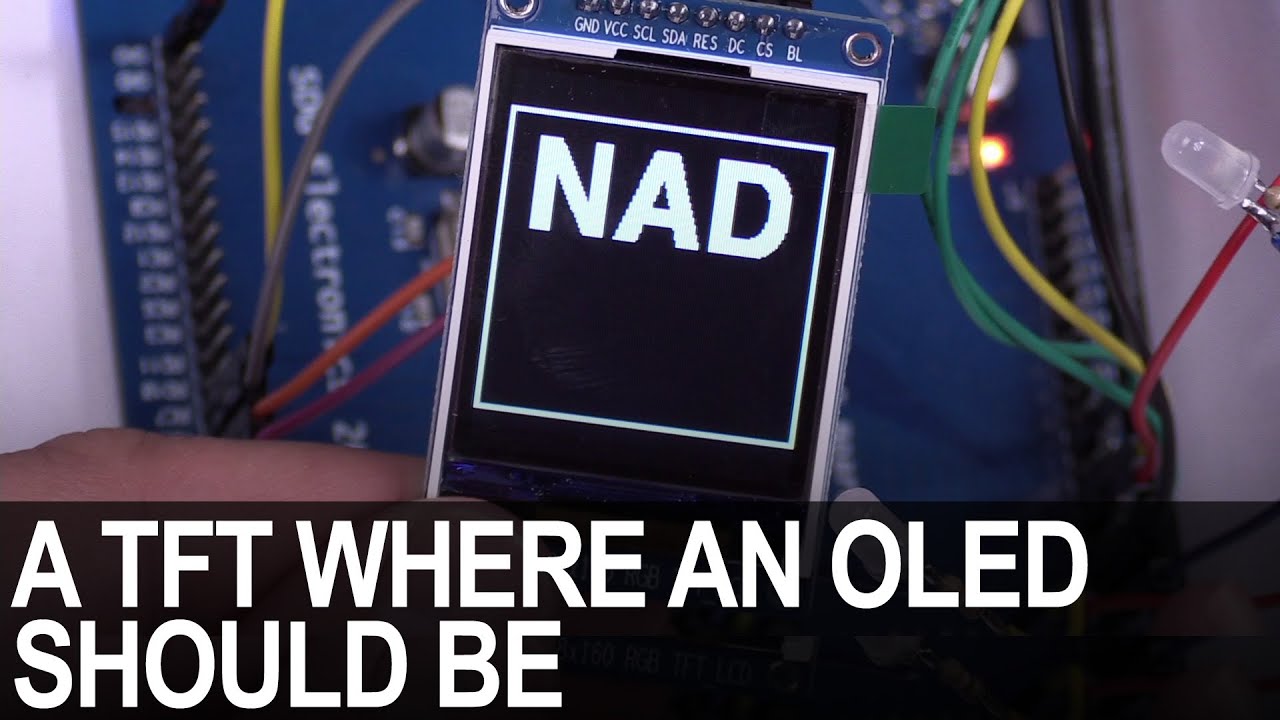
SDG #365 Reverse Engineering NAD D7050 OLED Replacement for IPS TFT
Decoding the NAD D7050's obsolete SSD1355 OLED protocol with a logic analyser, then driving an SSD1351 OLED and ST7735S IPS TFT as replacements.

SDG #360 Zero Crossing Detection and PCBWay 3D Prints
Testing PCBWay nylon PA12 and clear resin wall mounts for a Waveshare 4in ESP32-S3 touch dimmer, plus lower-power zero crossing detection options.