SDG #136 What's inside some car LED headlights?
Aftermarket LED headlight bulbs are one of the most heavily marketed automotive upgrades, with lumen claims that rarely survive scrutiny. This teardown removes the marketing and examines what a buyer is actually paying for: the LED emitters themselves, the constant current driver electronics, and the thermal management that determines whether the bulb still works in a year’s time.
The engineering detail sits in the driver. LED emitters need a regulated current source rather than a raw 12V feed, and a car’s electrical system is a hostile place for that, with load dump transients, alternator ripple and a supply that swings from cranking voltage up to around 14.4V. How well the on board switching converter copes with that, and whether there is any meaningful input protection or filtering, separates a bulb that lasts from one that fails early or radiates EMI across the AM band and other vehicle electronics.
Cooling is the other half of the story. Whether the design uses a passive finned heatsink or a small fan, the heat has to leave the emitter through the substrate and into the housing, and cheap thermal interfaces are a common shortcut. Poor heat extraction means the LEDs run hot, lose output and shift colour over time.
The practical conclusion for anyone considering these is that emitter placement relative to the original filament position matters more than raw lumen figures, because a reflector or projector housing was designed around a specific light source geometry. A bright bulb with the emitter in the wrong plane simply scatters light where it is not wanted, which is bad for the driver and worse for everyone else on the road.
More Electronics Projects

SDG #374 Smart Home Lighting: Adding Wireless DMX to My ESP32 Controller
Adding wireless DMX to an ESP32-S3 touch dimmer using ESP-NOW, with a 16-channel receiver, pairing, smoothing and scope-verified DMX output.
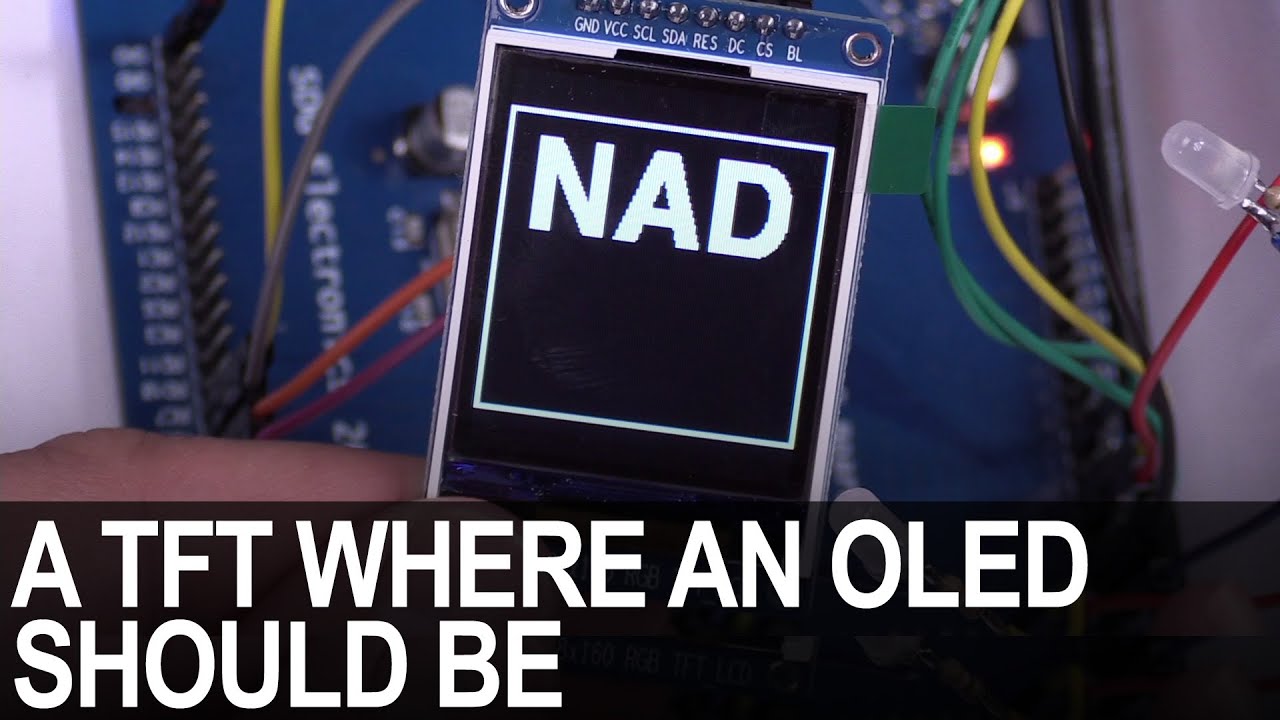
SDG #365 Reverse Engineering NAD D7050 OLED Replacement for IPS TFT
Decoding the NAD D7050's obsolete SSD1355 OLED protocol with a logic analyser, then driving an SSD1351 OLED and ST7735S IPS TFT as replacements.

SDG #360 Zero Crossing Detection and PCBWay 3D Prints
Testing PCBWay nylon PA12 and clear resin wall mounts for a Waveshare 4in ESP32-S3 touch dimmer, plus lower-power zero crossing detection options.