SDG #163 What's all this GPSDO stuff, anyhow? Why is there an FPGA?
This episode steps back from the bench to explain the theory behind a GPS disciplined oscillator project, and in particular why an FPGA has a place in the design rather than being unnecessary complexity.
The core problem is straightforward to state and difficult to solve well: a GPS receiver’s 1PPS output is extremely accurate over long periods but noisy and jittery second to second, while a good OCXO is very stable over seconds and minutes but drifts over hours, days and years. A GPSDO combines the two, using the long term accuracy of GPS to steer the short term stability of the local oscillator through a very slow control loop. Getting that loop right means measuring the phase difference between the 10MHz oscillator and the 1PPS edge with far better resolution than a simple counter clocked at 10MHz can offer, since one clock period is already 100ns of uncertainty.
That measurement requirement is where the FPGA argument is made. Rather than adding analogue ramp generators or interpolation tricks, the FPGA can implement a time interval counter with fine resolution using techniques a microcontroller cannot match, alongside dividers, gating logic and the housekeeping the loop needs, all in deterministic hardware. Comparison with existing designs, both DIY Arduino based GPSDOs and commercial laboratory instruments, gives useful context on what accuracy figures actually mean in practice and where holdover performance matters.
For anyone considering building their own frequency reference, the conclusion is that the oscillator is only half the job; the resolution and noise of the phase measurement, plus a sensibly damped control loop, determine whether the finished unit is genuinely better than the raw GPS module it started with.
More Electronics Projects

SDG #374 Smart Home Lighting: Adding Wireless DMX to My ESP32 Controller
Adding wireless DMX to an ESP32-S3 touch dimmer using ESP-NOW, with a 16-channel receiver, pairing, smoothing and scope-verified DMX output.
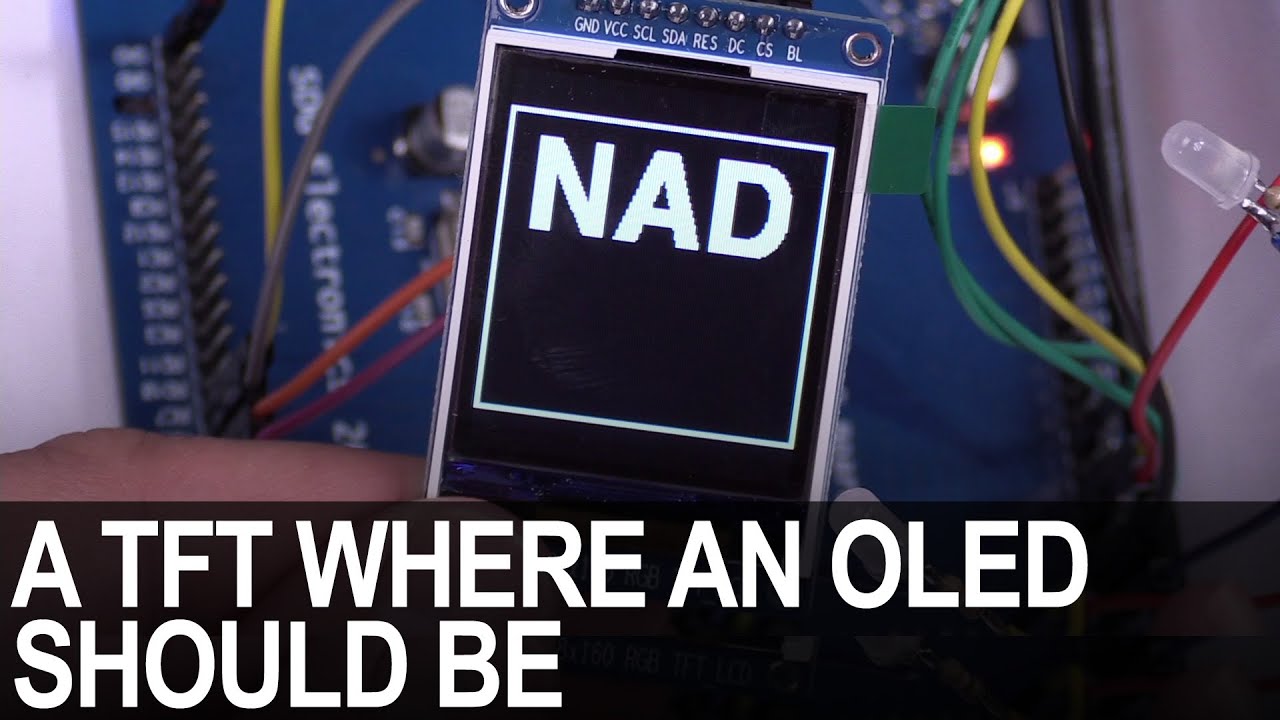
SDG #365 Reverse Engineering NAD D7050 OLED Replacement for IPS TFT
Decoding the NAD D7050's obsolete SSD1355 OLED protocol with a logic analyser, then driving an SSD1351 OLED and ST7735S IPS TFT as replacements.

SDG #360 Zero Crossing Detection and PCBWay 3D Prints
Testing PCBWay nylon PA12 and clear resin wall mounts for a Waveshare 4in ESP32-S3 touch dimmer, plus lower-power zero crossing detection options.