SDG #051 Driving RGB LEDs with 1 Constant Current Driver
RGB LED strips and modules look as though they should need three independent drivers, one per colour channel, because red, green and blue dies have very different forward voltages and efficiency curves. In practice most low cost commercial strips manage with a single constant current buck regulator, and this video explains how that arrangement works and what compromises it forces on the design.
The key idea is that the buck regulator has only one job: keep a fixed current flowing through whichever LED path is active. Channel selection happens downstream, with switching elements steering that regulated current into the red, green or blue string, or rapidly alternating between them so that the perceived colour is a duty cycle blend rather than a genuine simultaneous mix. Because the regulator is a current source rather than a voltage source, it automatically accommodates the differing forward voltage drops of each colour, adjusting its output voltage as the load changes instead of needing per channel ballast resistors.
That has practical consequences worth knowing before designing with or repairing one of these strips. Total brightness is shared rather than additive, so white output can be dimmer than the sum of the individual channels suggests. Timing matters as well: if the multiplexing rate is low, camera flicker and visible strobing appear, which is why some cheap strips look poor on video. Understanding the topology also makes fault finding much faster, since a single dead regulator kills all colours while a failed steering device usually leaves one channel permanently on or permanently dark.
More Electronics Projects

SDG #374 Smart Home Lighting: Adding Wireless DMX to My ESP32 Controller
Adding wireless DMX to an ESP32-S3 touch dimmer using ESP-NOW, with a 16-channel receiver, pairing, smoothing and scope-verified DMX output.
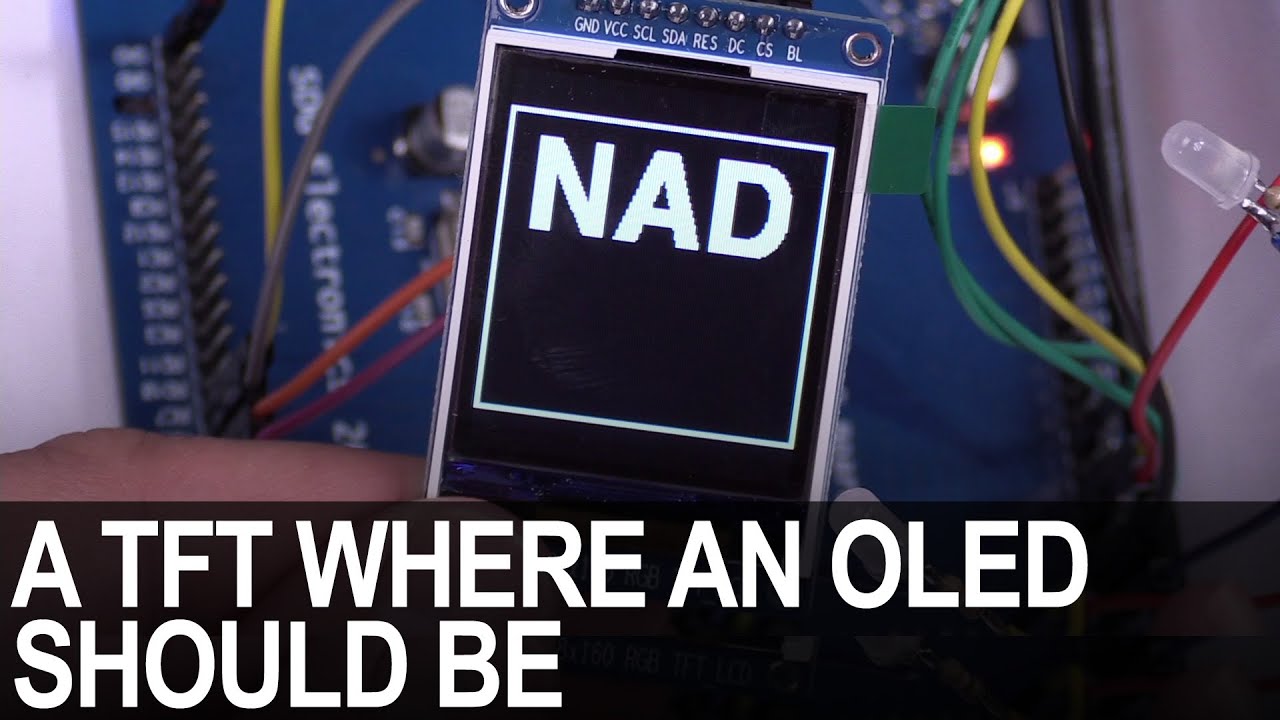
SDG #365 Reverse Engineering NAD D7050 OLED Replacement for IPS TFT
Decoding the NAD D7050's obsolete SSD1355 OLED protocol with a logic analyser, then driving an SSD1351 OLED and ST7735S IPS TFT as replacements.

SDG #360 Zero Crossing Detection and PCBWay 3D Prints
Testing PCBWay nylon PA12 and clear resin wall mounts for a Waveshare 4in ESP32-S3 touch dimmer, plus lower-power zero crossing detection options.