SDG #102 Beam Break Sensor using Amplitude Modulation Techniques
Simple beam break detectors, an LED aimed at a phototransistor with a comparator on the output, work well on a bench under controlled lighting and then fail the moment sunlight, fluorescent tubes or LED bulbs are present. This project addresses that problem properly by switching from a DC light beam to a modulated one, which is the same technique used inside infrared remote control receivers.
The principle is straightforward: rather than driving the emitter continuously, it is pulsed at a chosen carrier frequency. The receiver then amplifies only that frequency band and rejects everything else, so slowly changing ambient light and mains frequency flicker from artificial lighting are filtered out before they reach the detection stage. What matters in practice is the choice of carrier frequency relative to likely interference sources, the gain and bandwidth of the receiver amplifier, and how the recovered signal is rectified and thresholded into a clean digital output.
The walkthrough covers the emitter drive stage, the AC coupled receiver front end, the band limiting that gives the circuit its immunity, and the detection stage that turns the presence or absence of the carrier into a usable break signal. Testing under deliberately hostile lighting is the useful part, since it shows the difference in real terms between a naive design and a modulated one.
For anyone building object counters, safety interlocks, model railway detection or robot line and edge sensing, the conclusion is that modulation costs very little in parts and transforms reliability. It also explains why cheap unmodulated sensor modules behave erratically outdoors, and gives a design pattern that can be scaled to longer ranges by increasing emitter current during the pulse rather than raising average power.
More Electronics Projects

SDG #374 Smart Home Lighting: Adding Wireless DMX to My ESP32 Controller
Adding wireless DMX to an ESP32-S3 touch dimmer using ESP-NOW, with a 16-channel receiver, pairing, smoothing and scope-verified DMX output.
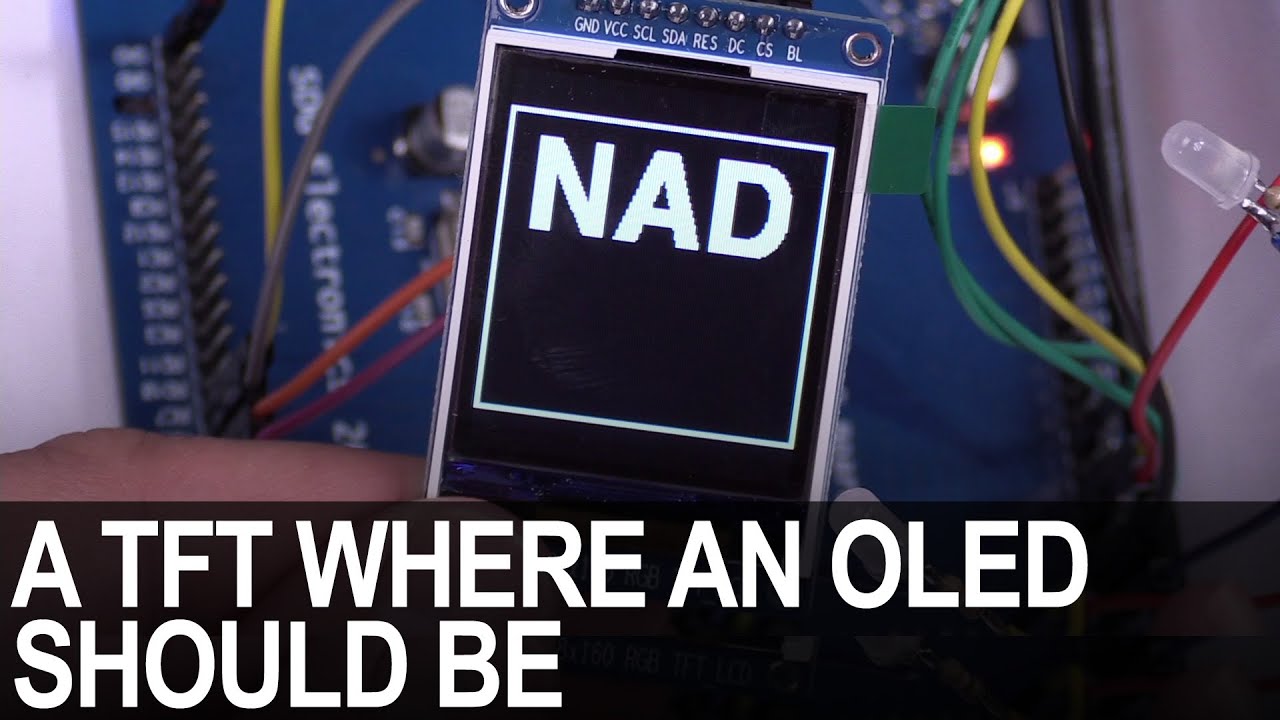
SDG #365 Reverse Engineering NAD D7050 OLED Replacement for IPS TFT
Decoding the NAD D7050's obsolete SSD1355 OLED protocol with a logic analyser, then driving an SSD1351 OLED and ST7735S IPS TFT as replacements.

SDG #360 Zero Crossing Detection and PCBWay 3D Prints
Testing PCBWay nylon PA12 and clear resin wall mounts for a Waveshare 4in ESP32-S3 touch dimmer, plus lower-power zero crossing detection options.