SDG #348 I bought over £30k of LED Lighting to reverse engineer
A pallet of ex-installation architectural LED pixels bought as “parts or not working” becomes a proper reverse engineering exercise. The hardware is Pulsar’s ArcDot2 range: 240 sets of IP65 diecast aluminium RGB dots, an ArcDotDriver80 Art-Net to RS485 controller, and several ArcDotBooster80 28 V power injectors. The listed fault was traced to the usual suspect, leaking electrolytics in the controller’s internal switch mode supply, and separately a dead 75176 differential transceiver on output channel one. A Zener tester confirms that the bidirectional protection diode was sound, which is a useful diagnostic order of operations for anyone chasing failed RS485 ports.
The teardown is the interesting part. Each dot uses an MBI5041 16 channel constant current driver with 16 bit PWM, nine PLCC RGB LEDs grouped in series threes, external ballast resistors to shift dissipation off the driver IC, and a buck regulator set to around 10.4 V so that long power runs can sag considerably and still work. Notably, a relay holds the data path in bypass until the local 8051 boots, so a dead node passes data straight through instead of corrupting downstream addressing, a genuinely better design than the shift-by-three DMX pixels covered in an earlier video.
Logic analyser and oscilloscope captures reveal a 1 Mbaud UART, 8N1, carrying a break plus 512 bytes of RGB data, so one output can drive 170 dots rather than the advertised 80. Auto addressing is two runs of 160 packets at 25 ms spacing. Frame rate works out near 125 Hz, well within reach of an ESP32 replacement controller.
More Electronics Projects

SDG #374 Smart Home Lighting: Adding Wireless DMX to My ESP32 Controller
Adding wireless DMX to an ESP32-S3 touch dimmer using ESP-NOW, with a 16-channel receiver, pairing, smoothing and scope-verified DMX output.
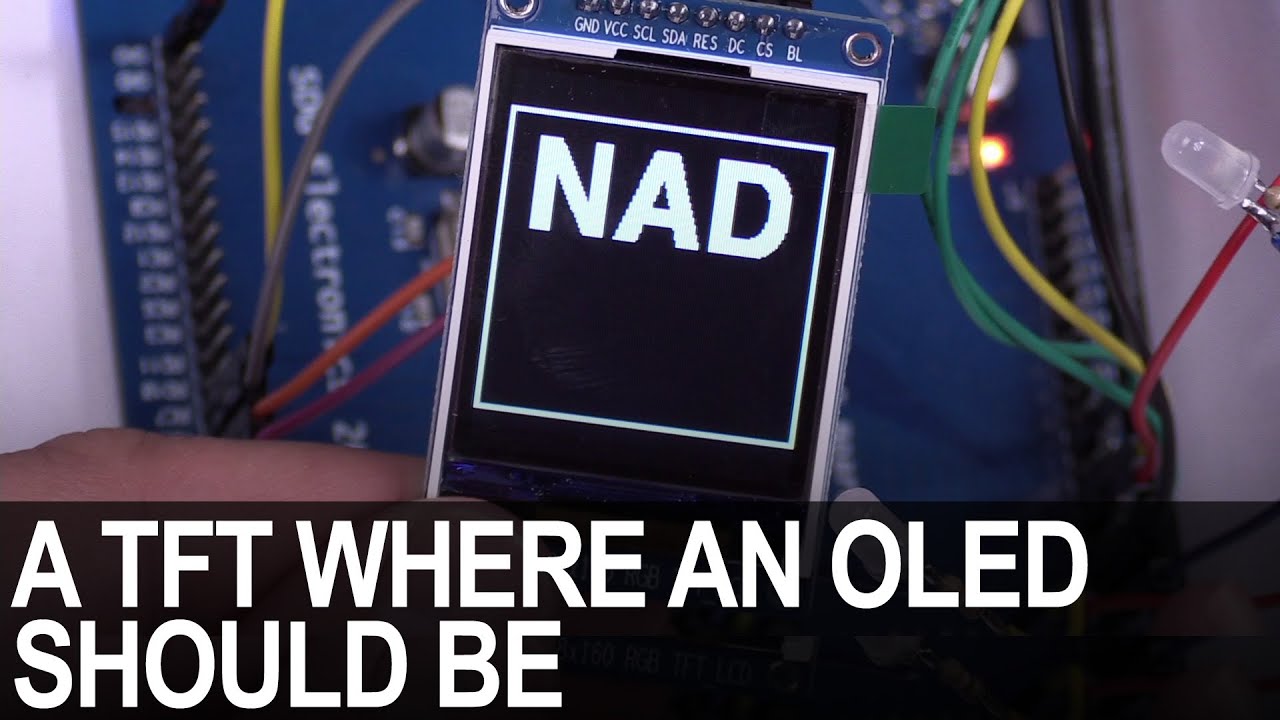
SDG #365 Reverse Engineering NAD D7050 OLED Replacement for IPS TFT
Decoding the NAD D7050's obsolete SSD1355 OLED protocol with a logic analyser, then driving an SSD1351 OLED and ST7735S IPS TFT as replacements.

SDG #360 Zero Crossing Detection and PCBWay 3D Prints
Testing PCBWay nylon PA12 and clear resin wall mounts for a Waveshare 4in ESP32-S3 touch dimmer, plus lower-power zero crossing detection options.