SDG #241 Electrical Cable Tracing with a Thermal Camera
Finding a cable that disappears into a wall, a floor void or a conduit run is a job where the usual tools fall short. Inductive cable tracers pick up neighbouring conductors, metal detectors flag every nail and pipe, and pulling a fish tape blind risks damaging something expensive. This video takes a different approach: deliberately load the conductor so that it dissipates a small amount of power, then use a thermal camera to observe where that heat surfaces.
The method works because even a modest current through a length of copper produces a measurable temperature rise, and that heat conducts outward through plaster, plasterboard or screed until it appears as a faint linear signature on the surface. The key practical points all concern control: enough current to generate a visible difference without damaging the insulation, enough time for the heat to soak through the covering material, and a camera sensitive enough to resolve small differences. Thin coverings and low thermal mass give quick, sharp results. Deeper runs under thick plaster or concrete need longer soak times and produce a blurrier trace, so patience matters more than raw camera resolution.
For anyone considering a thermal camera purchase, this is a genuinely useful argument in favour of one beyond the usual PCB fault finding. Thermal sensitivity, expressed as NETD, matters more here than pixel count, since the temperature differences involved can be well under a degree. The technique also transfers to underfloor heating loops, hidden pipework and identifying which of several similar cables in a bundle is actually carrying load.
More Electronics Projects

SDG #374 Smart Home Lighting: Adding Wireless DMX to My ESP32 Controller
Adding wireless DMX to an ESP32-S3 touch dimmer using ESP-NOW, with a 16-channel receiver, pairing, smoothing and scope-verified DMX output.
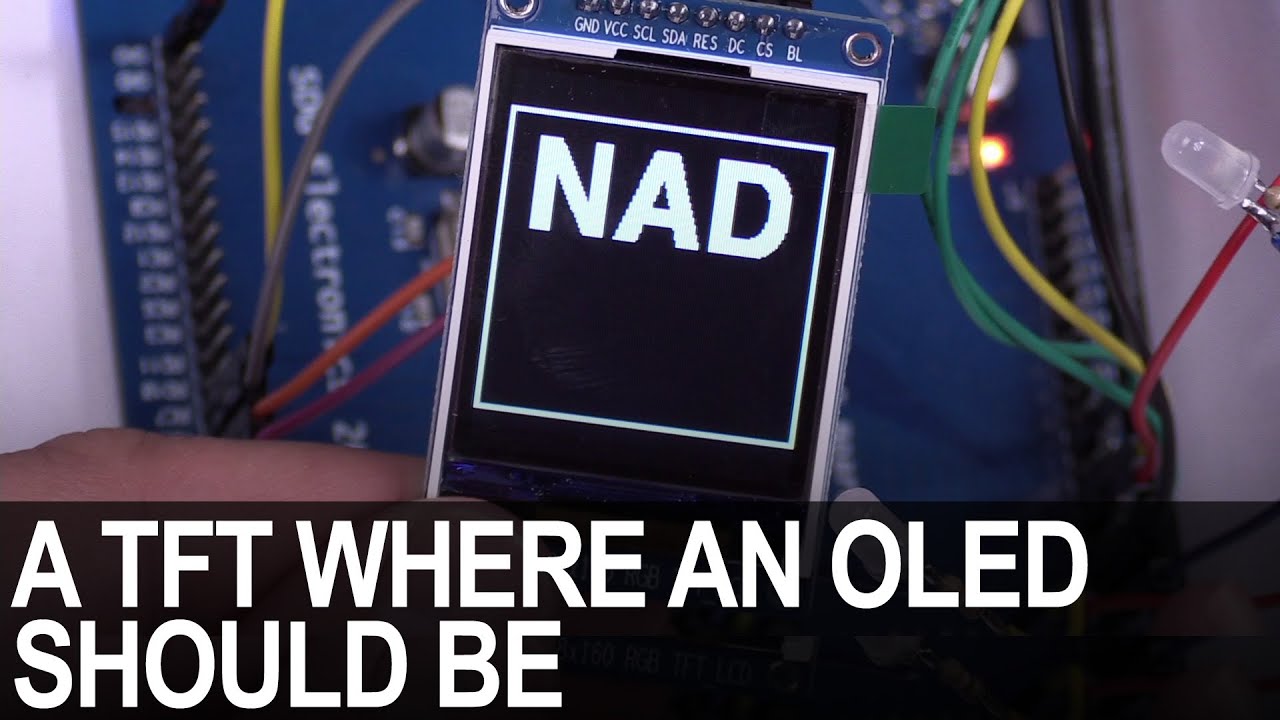
SDG #365 Reverse Engineering NAD D7050 OLED Replacement for IPS TFT
Decoding the NAD D7050's obsolete SSD1355 OLED protocol with a logic analyser, then driving an SSD1351 OLED and ST7735S IPS TFT as replacements.

SDG #360 Zero Crossing Detection and PCBWay 3D Prints
Testing PCBWay nylon PA12 and clear resin wall mounts for a Waveshare 4in ESP32-S3 touch dimmer, plus lower-power zero crossing detection options.