SDG #325 Designing a WLED RGBW light with only one LED driver
Most WLED based RGBW fixtures use a separate constant current driver for every colour channel, which multiplies cost, board area and inductor count by four. This design works through an alternative: one buck LED driver feeding all four channels, with per channel switching determining which string sees current at any given moment. It is a useful cost reduction, but it comes with real engineering trade-offs that deserve understanding before the idea is copied.
The key issue is what happens to a current mode buck regulator when its load is switched away from it. Forward voltages differ between red, green, blue and white dies, so the driver has to settle to a new operating point every time channels change, and PWM dimming means that can happen thousands of times a second. LTspice modelling is used to examine the current overshoot and settling behaviour, which is exactly the kind of preparation that separates a design that works on the bench from one that flickers or stresses the LEDs.
The AL8843 is chosen as the driver, a hysteretic buck device that is cheap, widely available and tolerant of the fast load changes this topology creates. The video then covers the full schematic, including the ESP based WLED controller side, channel switching and current setting, before moving into PCB layout and sending the board for fabrication.
For anyone building custom lighting rather than buying off the shelf strips, the useful conclusion is the reasoning: where the single driver approach saves money, and where the switching transients set the limits on what is achievable.
More Electronics Projects

SDG #374 Smart Home Lighting: Adding Wireless DMX to My ESP32 Controller
Adding wireless DMX to an ESP32-S3 touch dimmer using ESP-NOW, with a 16-channel receiver, pairing, smoothing and scope-verified DMX output.
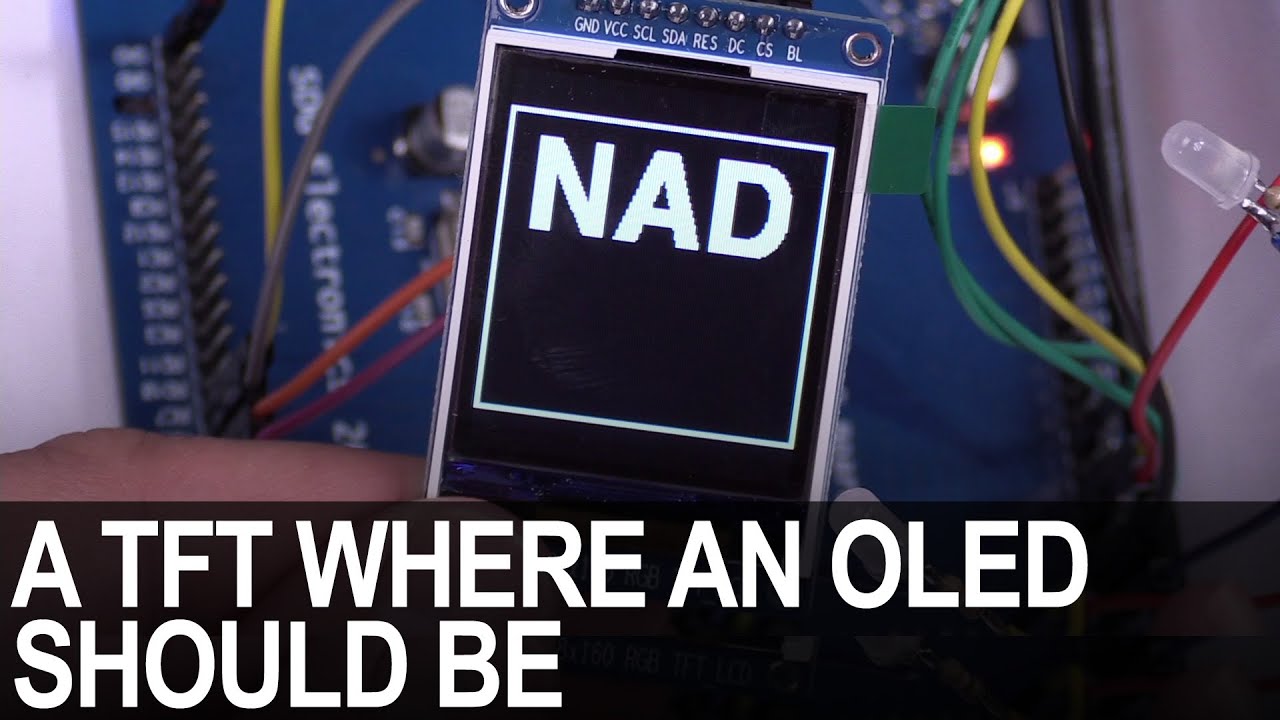
SDG #365 Reverse Engineering NAD D7050 OLED Replacement for IPS TFT
Decoding the NAD D7050's obsolete SSD1355 OLED protocol with a logic analyser, then driving an SSD1351 OLED and ST7735S IPS TFT as replacements.

SDG #360 Zero Crossing Detection and PCBWay 3D Prints
Testing PCBWay nylon PA12 and clear resin wall mounts for a Waveshare 4in ESP32-S3 touch dimmer, plus lower-power zero crossing detection options.