SDG #06 Mains Isolation Transformers and UK Earthing Systems
Bench safety rarely receives the attention it deserves, and this instalment addresses two topics that are closely linked but usually taught separately: what a mains isolation transformer actually protects against, and how UK domestic earthing arrangements shape that protection.
The key insight is that an isolation transformer does not make mains voltage harmless. It removes the reference to earth on the secondary side, so touching a single live conductor no longer completes a circuit through the body, the floor and the supply neutral. That is genuinely useful when probing live switch mode supplies, older transformerless equipment or anything where an oscilloscope ground clip could otherwise cause a short. It offers no help at all if both secondary conductors are bridged, which must be understood before relying on one.
The earthing discussion gives that theory practical context. Understanding whether a workshop sits on a TN-S supply with a separate earth conductor, a TN-C-S (PME) supply where earth is derived from the incoming neutral, or a TT installation relying on a local earth rod changes how fault current behaves and how much the protective devices can be trusted to trip. It also explains why earth loop impedance, RCD choice and bonding matter more in some installations than others.
For anyone buying an isolation transformer, the conclusions concern sizing for the load, checking that the unit is genuinely isolating rather than an autotransformer, and pairing it with an RCD on the supply side rather than treating either measure as a complete solution. It is useful groundwork before spending money on bench safety equipment.
More Electronics Projects

SDG #374 Smart Home Lighting: Adding Wireless DMX to My ESP32 Controller
Adding wireless DMX to an ESP32-S3 touch dimmer using ESP-NOW, with a 16-channel receiver, pairing, smoothing and scope-verified DMX output.
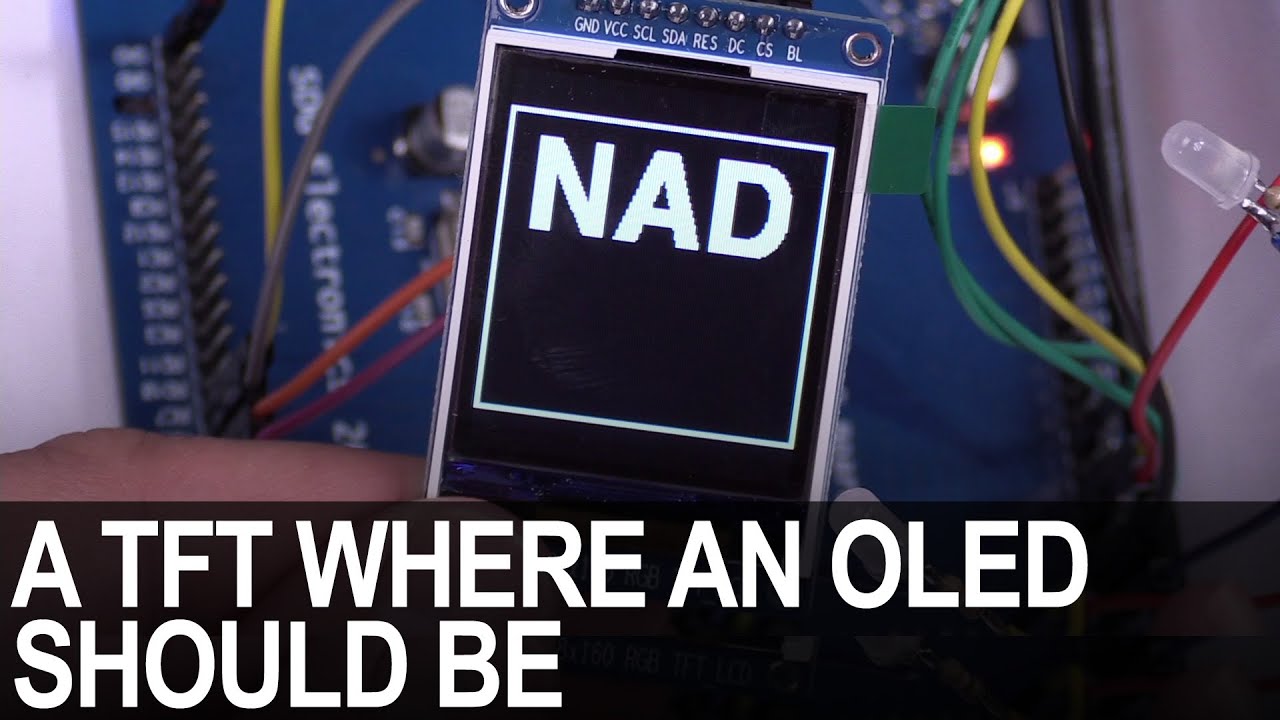
SDG #365 Reverse Engineering NAD D7050 OLED Replacement for IPS TFT
Decoding the NAD D7050's obsolete SSD1355 OLED protocol with a logic analyser, then driving an SSD1351 OLED and ST7735S IPS TFT as replacements.

SDG #360 Zero Crossing Detection and PCBWay 3D Prints
Testing PCBWay nylon PA12 and clear resin wall mounts for a Waveshare 4in ESP32-S3 touch dimmer, plus lower-power zero crossing detection options.