SDG #200 The repeated failure of Knightsbridge strip lights.
Knightsbridge LED battens and strip fittings are a common sight in garages, workshops and commercial spaces, and they have a reputation for failing long before the lifetime figures printed on the box. This video works through a set of failed Knightsbridge strip lights that have died more than once in the same installation, which is the key detail: a single dead unit is bad luck, but repeat failures in the same position point at a design or specification problem rather than a random component fault.
The investigation follows the usual sensible order. First the fitting is opened to see how the LED board and driver are packaged, then the driver is checked against the load it is actually being asked to run. From there the failure mode can be traced, whether that is an electrolytic capacitor overheated by proximity to hot components, an LED string running above its comfortable current, or a driver enclosed in a sealed plastic housing with nowhere for heat to go. Enclosed diffuser style fittings are notoriously unforgiving in this respect, and running LEDs hard to reach a headline lumen figure shortens life dramatically.
For anyone with the same fittings, the practical conclusion is that fitting an identical replacement will usually just restart the clock on the same failure. Either the driver needs derating, the fitting needs better ventilation, or the whole unit needs replacing with something built to run its LEDs cooler. It is also a useful reminder that branded, UK sold fittings are not automatically better engineered inside than budget imports, and that repairability varies enormously between models.
More Repairs

SDG #368 Tricky Repair: Cambridge Audio Bluetone 100 - No Bluetooth
Diagnosing a Bluetone 100 that plays analogue audio but won't pair. Scope traces, EEPROM dumps and a CSR8645 to CSR8675 module swap that finally works.

SDG #363 eBay NAD Direct Digital Amplifier D 7050 Repair - Lots of issues
Repairing a faulty eBay NAD D 7050 digital amplifier: cracked SMPS transformer, dead caps, blown OLED boost converter and a burnt out white LED.
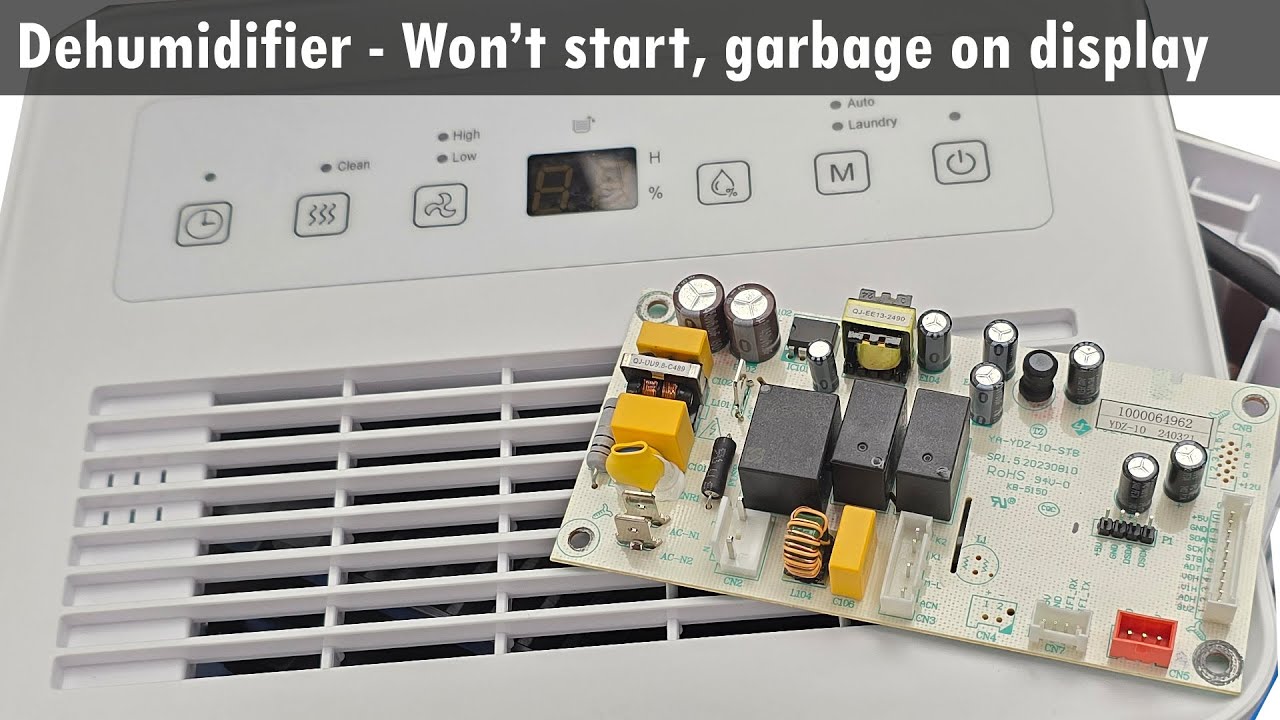
SDG #356 Repair of an Amazon Return Shinco Dehumidifier SDL5-10D
A faulty Shinco SDL5-10D dehumidifier bought for £5 as a customer return, diagnosed and fixed: blown display driver IC and an open-circuit resistor.